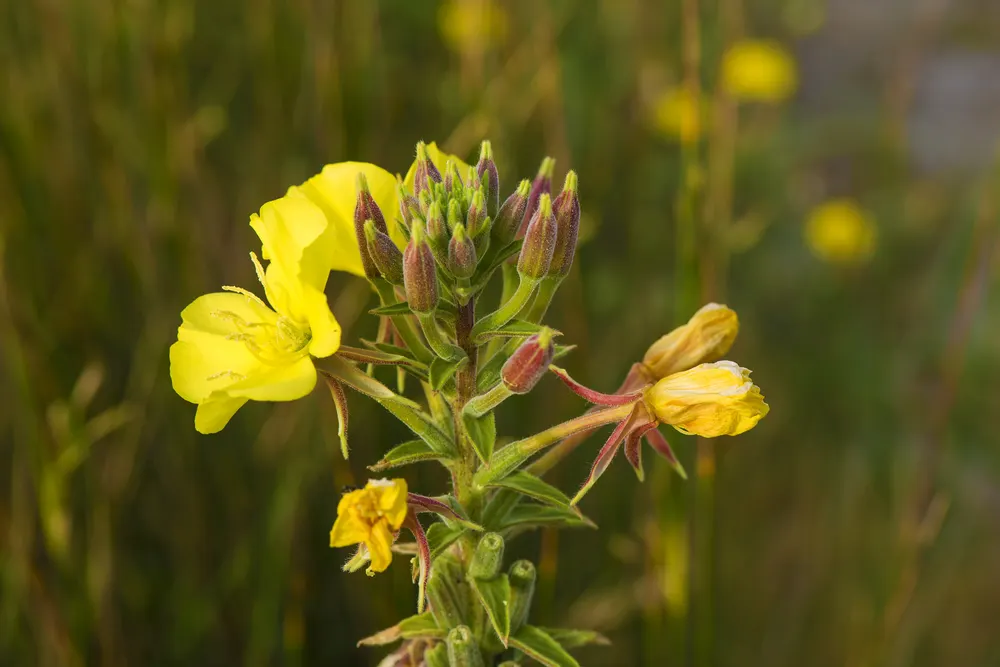
Photo: Christian Ferrer, CC BY-SA 4.0 (via Wikimedia Commons)
Evening Primrose
Oenothera biennis
Also known as Evening Star, Sundrop, King's Cure-All, Fever Plant, Night Willowherb
Key benefits
✦Traditional uses
✦Long before evening primrose oil lined pharmacy shelves, Native American nations from the Iroquois to the Ojibwe were already using this modest roadside plant. The boiled roots were eaten as a peppery vegetable, the young leaves brewed into a simple tea for minor complaints, and a poultice of the pounded root was pressed onto bruises and sore joints. Settlers picked up the habit and added their own name for it, King's Cure-All, a nod to how many household ailments it was called upon to soothe. It was the strange nighttime habit of the flower, opening in a matter of minutes as the sun went down, that first caught the eye of herbalists and gave the plant its lasting name.
How to grow & use it
✦The full apothecary for Evening Primrose
Traditional remedies and step-by-step preparations, a complete growing guide, and how to harvest, dry, and store it, all unlocked with HerbLens Unlimited.
- ✦Remedies & preparations
- ✦ Growing guide
- ✦Harvest & storage
From under $6 a month. Free plant identifications always included.
- ✦Borage
- ✦Chamomile
- ✦Flaxseed
- ✦Borage seed oil
- ✦Black currant seed oil
“For soft evenings, quiet skin care, and a garden that keeps its best trick for after sundown.”
Evening primrose blossoms open so quickly at dusk, sometimes in under a minute, that generations of gardeners have made a small ritual of sitting beside the plant at twilight just to watch it happen, drawn by the same pale glow that calls in its moth pollinators.
Evening primrose oil can cause mild stomach upset and may thin the blood, so use caution with blood-thinning medication and stop before surgery. It has also been linked to a lower seizure threshold in people taking certain antipsychotic medications, and it's best avoided in pregnancy unless a doctor advises otherwise.