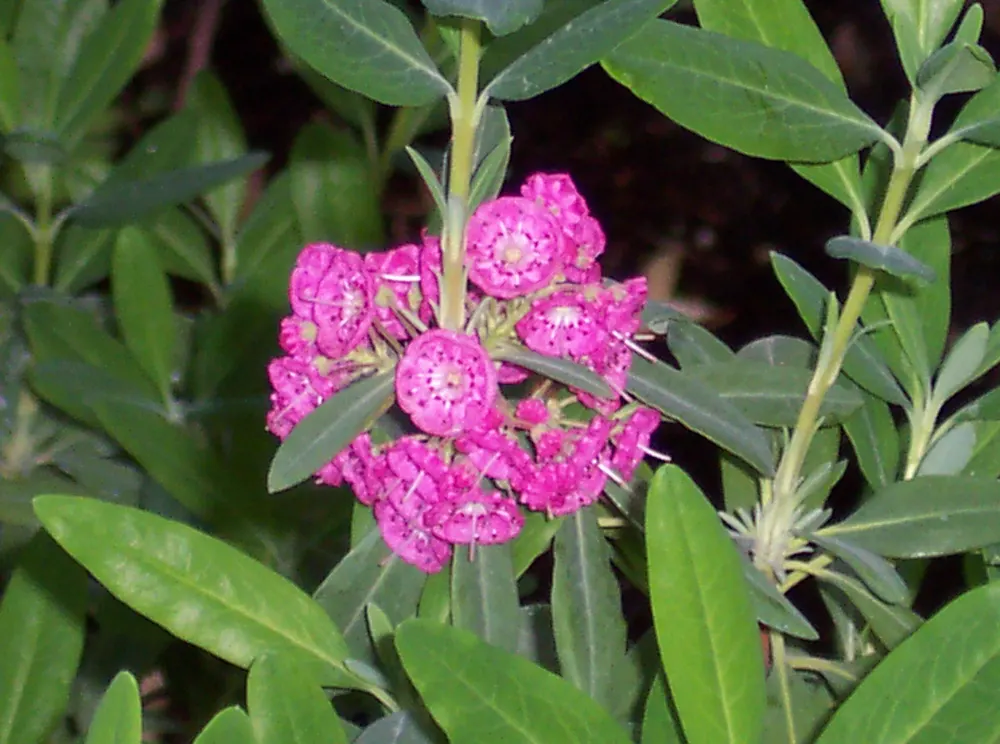
Photo: A. Barra, CC BY 3.0 (via Wikimedia Commons)
Sheep Laurel
Kalmia angustifolia
Also known as Lambkill, Dwarf Laurel, Wicky, Sheepkill
Traditional uses
✦Sheep laurel earned its common name the hard way, from generations of farmers who watched grazing sheep and cattle sicken after browsing its leaves in lean pasture years. Some northeastern Indigenous communities are recorded to have used related Kalmia species with great caution and in very limited external contexts, but sheep laurel itself was regarded first and foremost as a plant to identify and avoid rather than a household remedy. Its lasting value has been as a warning sign for land, since a pasture thick with sheep laurel tells a farmer the soil is acidic, wet, and overgrazed. Today it survives mostly in field guides and old farm journals as a lesson in respecting a beautiful plant from a distance.
How to grow & use it
✦The full apothecary for Sheep Laurel
Traditional remedies and step-by-step preparations, a complete growing guide, and how to harvest, dry, and store it, all unlocked with HerbLens Unlimited.
- ✦Remedies & preparations
- ✦ Growing guide
- ✦Harvest & storage
From under $6 a month. Free plant identifications always included.
“A pretty warning worn in pink, best admired in a bog garden and never in a teacup.”
The leathery, leaves-in-threes look of sheep laurel led early New England settlers to plant it as a boundary and pasture-poisoning marker almost in reverse, since the shrub's persistence in a field was itself a signal that the ground needed rest.
Sheep laurel is toxic and should never be ingested. All parts of the plant, including the leaves, nectar, and even honey made from its flowers, contain grayanotoxins, compounds that disrupt normal cell function and can cause vomiting, drooling, weakness, low blood pressure, irregular heartbeat, seizures, and in serious cases death in both livestock and humans. It has a long documented history of poisoning sheep, cattle, and other grazing animals, which is how it earned its common name. There is no traditionally safe internal preparation of this plant, so no remedies are listed here. Keep it away from grazing animals, children, and pets, and never taste any part of it. If exposure or poisoning is suspected, contact a poison control center or medical professional immediately, and consult a qualified healthcare provider or veterinarian before assuming any plant is safe to use.