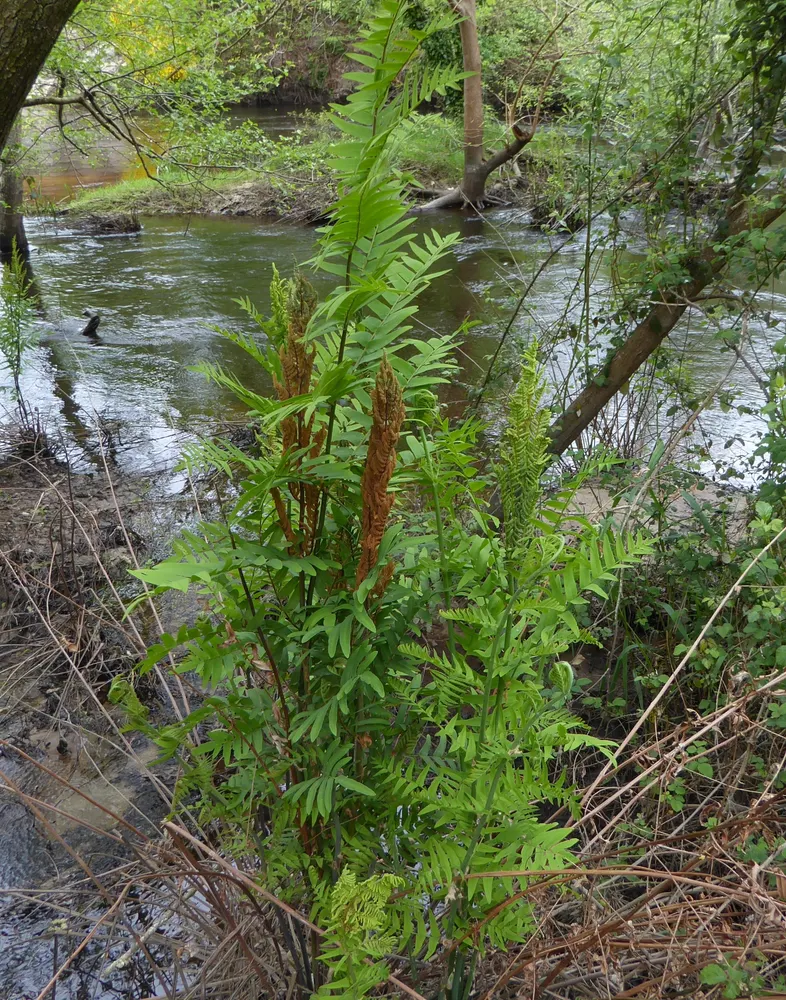
Photo: E Wusk, CC BY-SA 4.0 (via Wikimedia Commons)
Royal Fern
Osmunda regalis
Also known as Flowering Fern, King Fern, Water Fern, Osmund Royal, Bog Onion
Key benefits
✦Traditional uses
✦Royal Fern has stood at the water's edge of the old herbals for centuries, and the seventeenth century herbalist Nicholas Culpeper praised what he called Osmund the Waterman for easing bruises, sprains, and dislocated joints. Country folk in Britain and across Europe dug the thick, mucilaginous root, crushed or gently simmered it, and bound it warm against aching limbs, giving the plant its old reputation as a healer for those who worked hard on their feet. It was also called the King Fern, a nod to its stately size and the crown like cluster of fertile fronds it raises each summer above the surrounding greenery.
How to grow & use it
✦The full apothecary for Royal Fern
Traditional remedies and step-by-step preparations, a complete growing guide, and how to harvest, dry, and store it, all unlocked with HerbLens Unlimited.
- ✦Remedies & preparations
- ✦ Growing guide
- ✦Harvest & storage
From under $6 a month. Free plant identifications always included.
- ✦Comfrey root
- ✦Arnica flower
- ✦Witch hazel bark
- ✦Comfrey root
- ✦Arnica
“For a garden that longs for still water, or a bruise that longs for a warm and gentle wrap, royal fern has answered both for centuries.”
The shaggy black fiber pulled from royal fern roots, known to gardeners as osmunda fiber, was for generations the gold standard potting medium for orchids, prized for holding moisture while still letting roots breathe.
Royal fern's root has a long history of external, topical use only, with no established internal dose. As with all ferns, raw or unidentified fronds and fiddleheads should never be eaten.