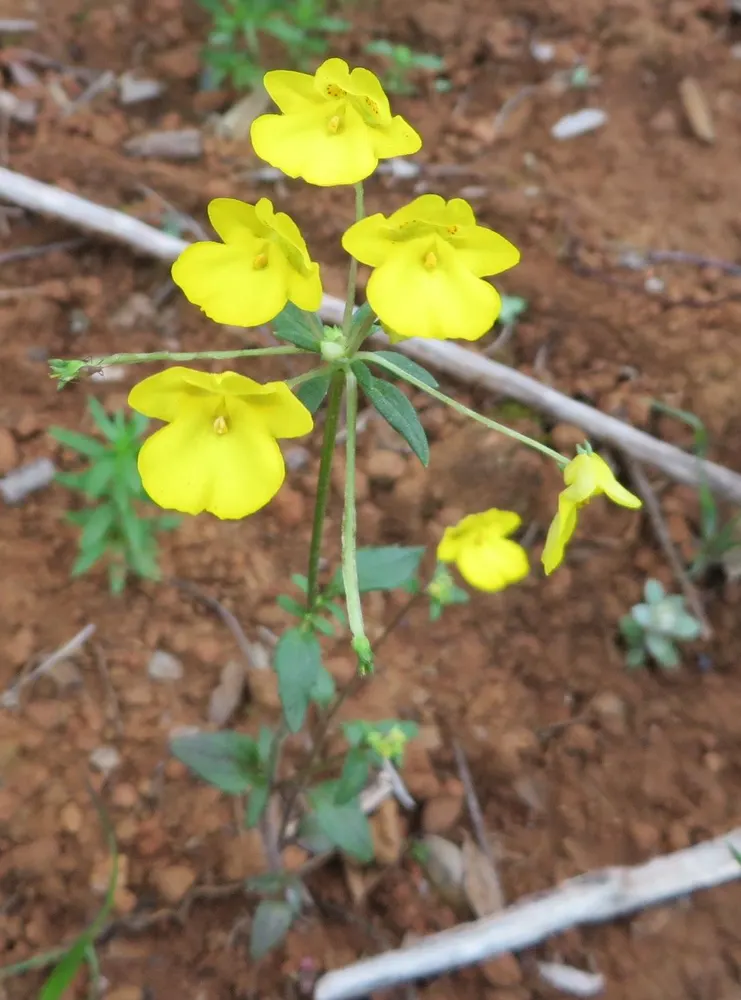
Photo: linkie, CC BY 4.0 (via Wikimedia Commons)
Cape Flare Flower
Hemimeris racemosa
Also known as Cape Flare Flower, Yellow Hemimeris
Key benefits
✦Traditional uses
✦Hemimeris racemosa comes from the winter-rainfall flats and slopes of South Africa's Western Cape, where it opens its small snapdragon-like flowers among the low scrub each spring. It has no recorded history in herbal medicine or the kitchen, and this entry does not suggest it as one. Its real legacy is a horticultural and ecological one, as a modest, sun-loving annual that South African gardeners and botanists have long admired for the sheer cheerfulness it brings to a rock garden or wildflower border, and for the small bees it welcomes into the yard. Think of it less as a remedy and more as a bright, honest little plant that earns its place by simply doing well where little else will.
How to grow & use it
✦The full apothecary for Cape Flare Flower
Traditional remedies and step-by-step preparations, a complete growing guide, and how to harvest, dry, and store it, all unlocked with HerbLens Unlimited.
- ✦Remedies & preparations
- ✦ Growing guide
- ✦Harvest & storage
From under $6 a month. Free plant identifications always included.
- ✦Nemesia
- ✦Diascia
- ✦Osteospermum (African daisy)
- ✦Nemesia
- ✦Diascia
“For the gardener who wants a patch of sunny yellow that asks for almost nothing in return.”
Hemimeris is a small genus closely related to Nemesia and Diascia, all part of the extraordinarily diverse Cape Floristic Region, one of the richest concentrations of plant species found anywhere on Earth. Its species name, racemosa, simply describes the way its flowers line up in a loose, unbranched cluster called a raceme.
There's no record of this plant being used as food or medicine and its toxicity hasn't been studied, so treat it as an ornamental only and keep it away from children and pets.