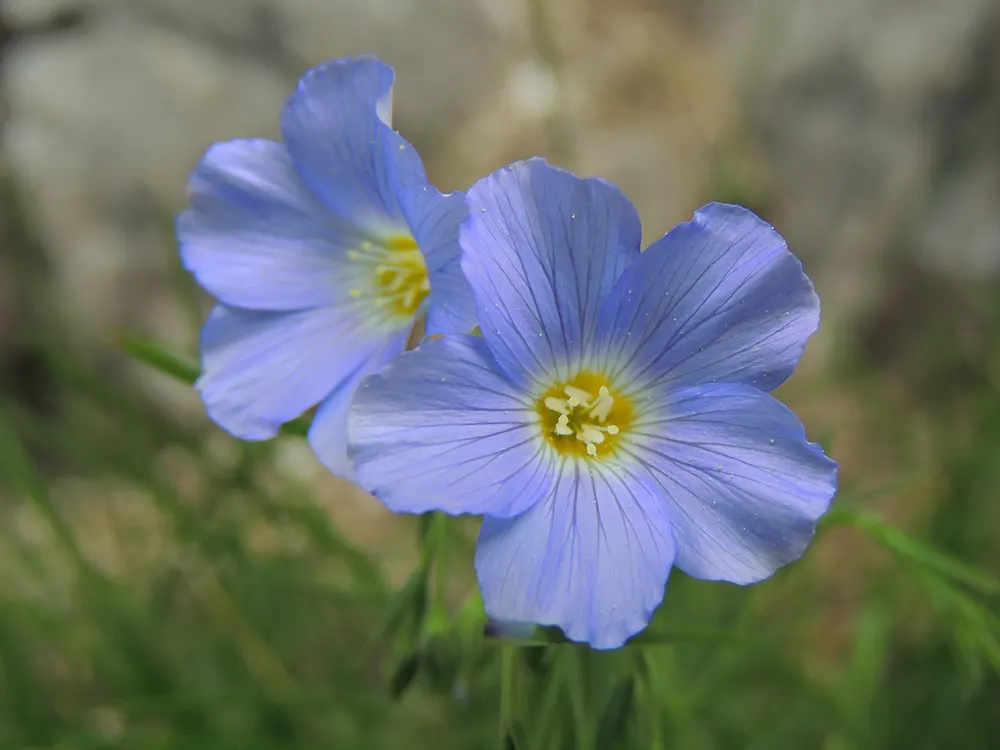
Photo: xulescu_g, CC BY-SA 2.0 (via Wikimedia Commons)
Alpine Flax
Linum alpinum
Also known as Mountain Flax, Rock Flax
Key benefits
✦Traditional uses
✦Alpine flax has always lived more in the rock garden than in the medicine chest. Unlike its famous lowland cousin, common flax, which has been spun into linen and pressed for oil since the days of ancient Egypt, Linum alpinum never developed a strong tradition of household or medicinal use. Alpine botanists and gardeners have prized it for centuries all the same, for the way its papery blue flowers seem to catch a piece of mountain sky and hold it against bare stone. It earned its keep simply by being lovely where little else would grow.
How to grow & use it
✦The full apothecary for Alpine Flax
Traditional remedies and step-by-step preparations, a complete growing guide, and how to harvest, dry, and store it, all unlocked with HerbLens Unlimited.
- ✦Remedies & preparations
- ✦ Growing guide
- ✦Harvest & storage
From under $6 a month. Free plant identifications always included.
- ✦Creeping thyme
- ✦Dianthus (garden pinks)
- ✦Saxifrage
- ✦Common flax (Linum usitatissimum) is the true source of culinary flaxseed and flaxseed oil, and is the species to seek out for those traditional uses
“For a sky-blue jewel that asks for nothing but sun and stone, and gives a mountain view in return.”
Like many of its Linum cousins, each alpine flax blossom is something of a mayfly among flowers. It unfurls fresh in the morning light and can drop its petals by the same afternoon, so a plant in full bloom is really rebuilding its entire show, flower by flower, day after day all summer long.
Unlike common culinary flax, alpine flax's seeds and foliage may contain cyanogenic compounds that can be harmful if eaten in quantity, particularly unripe. Keep it as an ornamental and out of reach of grazing pets or livestock.