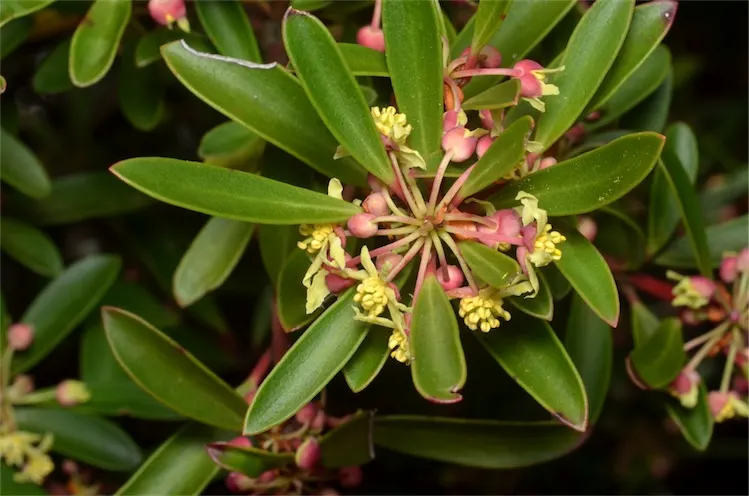
Photo: Murray Fagg, CC BY 3.0 (via Wikimedia Commons)
Mountain Pepper
Tasmannia lanceolata
Also known as Tasmanian Pepperberry, Pepperleaf, Tasmanian Pepper, Cornish Pepper Leaf
Key benefits
✦Traditional uses
✦Long before it reached fine dining kitchens, mountain pepper was a staple of Aboriginal Australian bushcraft, its glossy leaves and dark berries chewed for their fierce, lingering heat and used to season food, ease toothache, and settle an upset stomach. Early European settlers in Tasmania picked up the same habits, calling it Cornish pepper leaf and using it as a home remedy for colds and digestive complaints when imported black pepper was scarce or dear. Today it has become one of the signature native spices of modern Australian bush food cooking, prized for a heat that builds slowly and a fruity, almost eucalyptus-tinged aroma underneath.
How to grow & use it
✦The full apothecary for Mountain Pepper
Traditional remedies and step-by-step preparations, a complete growing guide, and how to harvest, dry, and store it, all unlocked with HerbLens Unlimited.
- ✦Remedies & preparations
- ✦ Growing guide
- ✦Harvest & storage
From under $6 a month. Free plant identifications always included.
- ✦Lemon myrtle
- ✦Black pepper
- ✦Wattleseed
- ✦Black pepper
- ✦Szechuan pepper
“For a peppery warmth that builds slowly, like a forest ember catching.”
Mountain pepper owes its slow-building burn to a compound called polygodial, which is far more pungent than the piperine in true black pepper and has been studied by scientists for its antimicrobial and antifungal properties.
Mountain pepper is a safe, widely used spice in ordinary culinary amounts, but its active compound, polygodial, is intensely pungent and can irritate the mouth or stomach if used heavily, so more isn't better here.