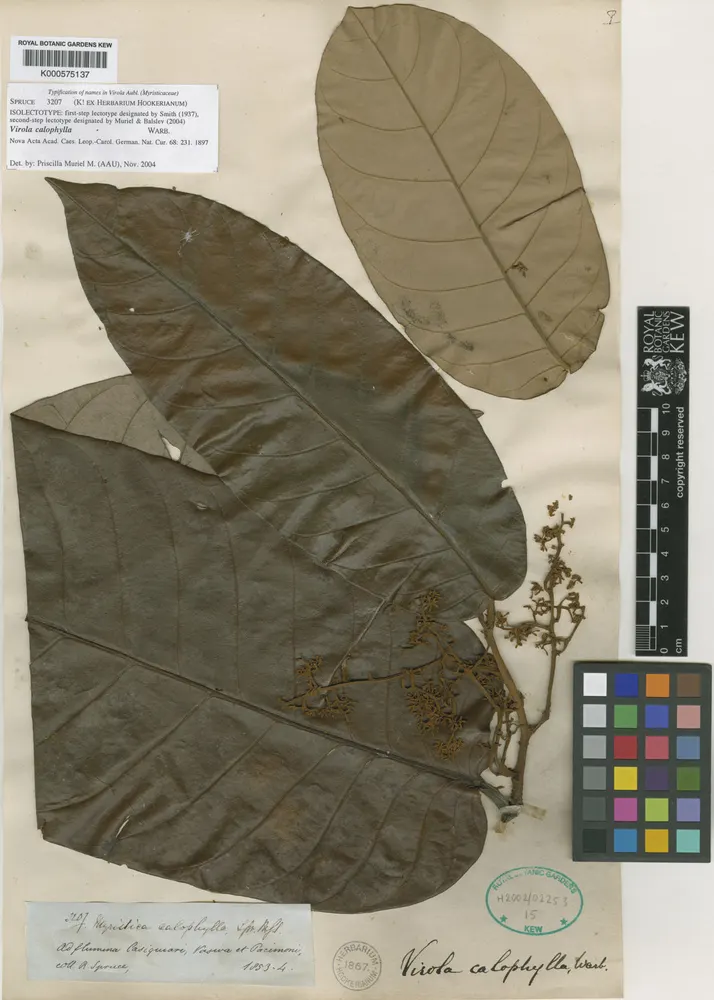
Photo: Royal Botanic Gardens, Kew, CC BY 4.0 (via Wikimedia Commons)
Virola (Cumala)
Virola calophylla
Also known as Cumala, Cumala Colorada, Wild Nutmeg, Epená Tree
Traditional uses
✦Virola calophylla grows tall and quiet in the understory of the western Amazon, one of many Virola species whose blood-red bark resin has been used for centuries by Amazonian peoples, including groups in the Yanomami, Bora, and Witoto traditions, to prepare powerful ceremonial snuffs. These preparations were reserved for shamans and healers, used in tightly controlled ritual settings for divination, spiritual work, and treating illness believed to have spiritual causes. The tree was never a kitchen or household herb. Its resin was, and remains, sacred and dangerous in equal measure, entrusted only to those trained to handle it.
How to grow & use it
✦The full apothecary for Virola (Cumala)
Traditional remedies and step-by-step preparations, a complete growing guide, and how to harvest, dry, and store it, all unlocked with HerbLens Unlimited.
- ✦Remedies & preparations
- ✦ Growing guide
- ✦Harvest & storage
From under $6 a month. Free plant identifications always included.
“A tree of deep forest shadow, wrapped in ceremony, caution, and centuries of guarded knowledge.”
The cut bark of Virola calophylla weeps a resin that darkens from pale pink to deep blood red within minutes of touching the air, a striking transformation that early ethnobotanists like Richard Evans Schultes documented while studying its use among Amazonian peoples in the mid-twentieth century.
Virola calophylla bark resin contains potent psychoactive tryptamine compounds, including DMT and related alkaloids, and is traditionally prepared into a hallucinogenic snuff used only by trained shamans in strict ceremonial Amazonian contexts. It is not a culinary, tea, or home-remedy herb of any kind. Ingesting, inhaling, or preparing any part of this plant can cause intense and unpredictable psychoactive effects, and DMT-containing preparations are controlled or illegal substances in many countries, including the United States. This entry is provided for botanical and cultural reference only. Do not forage, prepare, or ingest this plant. If you have questions about it, speak with a qualified botanist, ethnobotanist, or legal professional rather than attempting any self-preparation.