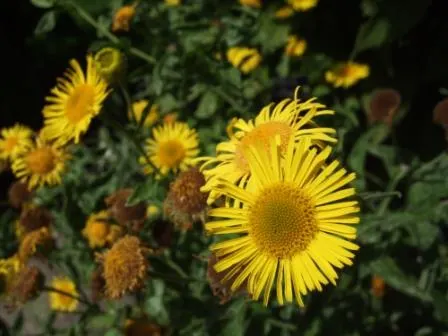
Photo: DDennisM, CC BY 3.0 (via Wikimedia Commons)
Common Fleabane
Pulicaria dysenterica
Also known as Meadow Fleabane, Marsh Fleabane, Yellow Fleabane
Key benefits
✦Traditional uses
✦Common Fleabane earned its old Latin name from two very different jobs country people once asked of it. The genus, Pulicaria, comes from pulex, the Latin word for flea, because bunches of the dried, camphor-scented herb were strewn on floors and stuffed into bedding to drive the pests away. The species name, dysenterica, points to its other reputation, as a folk remedy steeped and taken for dysentery and troublesome bowels in the days before proper medicine existed for such things. Herbalists in the English and Irish countryside also turned to the leaves for washing wounds, itching skin, and old sores, valuing the plant as a humble, hedgerow-grown standby rather than a rare or costly import.
How to grow & use it
✦The full apothecary for Common Fleabane
Traditional remedies and step-by-step preparations, a complete growing guide, and how to harvest, dry, and store it, all unlocked with HerbLens Unlimited.
- ✦Remedies & preparations
- ✦ Growing guide
- ✦Harvest & storage
From under $6 a month. Free plant identifications always included.
- ✦Chamomile
- ✦Meadowsweet
- ✦Peppermint
- ✦Chamomile
- ✦Meadowsweet
“For the damp, forgotten corner of the meadow, and the old remedies country people carried before the pharmacy existed.”
Common Fleabane's whole name is a little history lesson: Pulicaria for the fleas it was burned or scattered to repel, and dysenterica for the bowel troubles country folk once dosed with it, long before either use had any scientific backing.
As a daisy-family plant, common fleabane can cause allergic skin reactions in people sensitive to ragweed or related plants. Its traditional use against dysentery refers to a serious infection that needs real medical treatment, not a folk remedy.