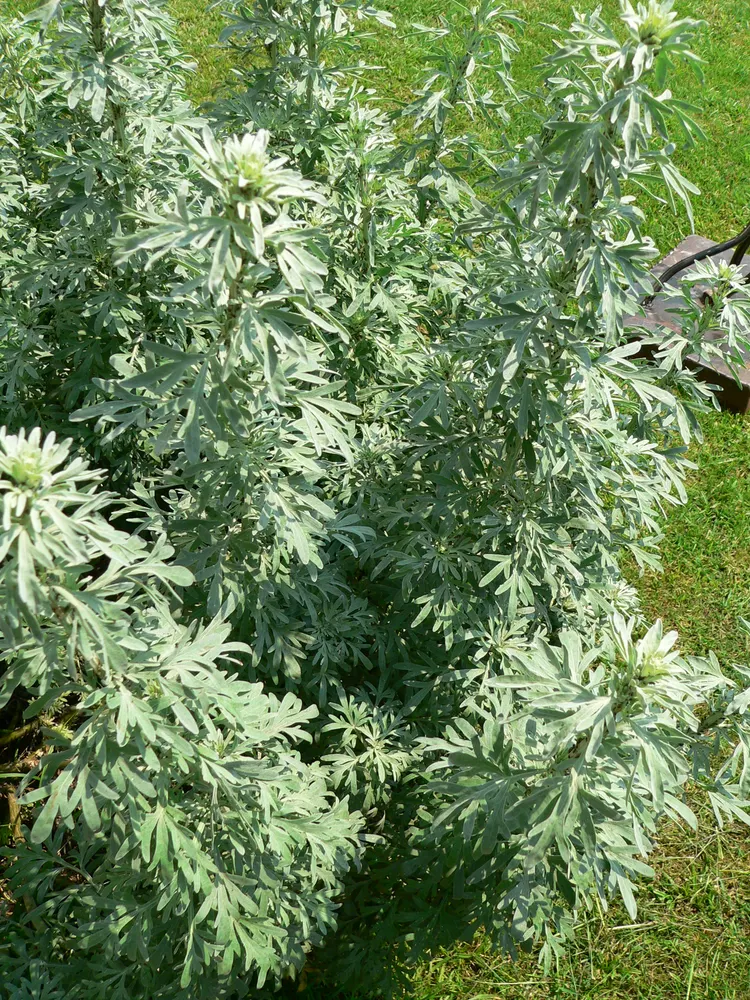
Photo: David Monniaux, CC BY-SA 3.0 (via Wikimedia Commons)
Wormwood
Artemisia absinthium
Also known as Absinthium, Common Wormwood, Grand Wormwood, Green Ginger, Old Woman
Key benefits
✦Traditional uses
✦Wormwood earned its common name honestly: for centuries it was the bitter herb households turned to for expelling intestinal worms, and old apothecaries kept it close at hand for exactly that reason. Its intense, resinous bitterness also made it one of the great digestive bitters of European herbal tradition, chewed or brewed in small amounts to wake up a sluggish appetite before a meal. The Egyptians and Greeks both prized it medicinally, and Artemisia, its genus name, is said to honor the Greek goddess Artemis or an ancient herbalist queen who championed its use. It is perhaps most famous, for better or worse, as the defining ingredient of absinthe and a flavoring note in traditional vermouth, both of which trace their name and their bitterness straight back to this silvery, sharp-scented plant.
How to grow & use it
✦The full apothecary for Wormwood
Traditional remedies and step-by-step preparations, a complete growing guide, and how to harvest, dry, and store it, all unlocked with HerbLens Unlimited.
- ✦Remedies & preparations
- ✦ Growing guide
- ✦Harvest & storage
From under $6 a month. Free plant identifications always included.
- ✦Peppermint
- ✦Fennel
- ✦Ginger
- ✦Gentian root
- ✦Dandelion root
“For the old-world shock of bitterness that was once trusted to wake a sleepy appetite before supper.”
Wormwood is the herb behind the notorious 'Green Fairy' of nineteenth-century Paris, absinthe, and it lends vermouth both its bitterness and its name, since 'vermouth' comes from the German word 'wermut,' meaning wormwood.
Wormwood contains thujone, which in excess is toxic to the nervous system and can cause seizures and tremors; the essential oil is especially potent and should never be ingested. Avoid it during pregnancy, breastfeeding, and in children, and anyone with a seizure disorder or on anticonvulsant medication should not use it. Traditional preparations were always kept weak, occasional, and short in duration.