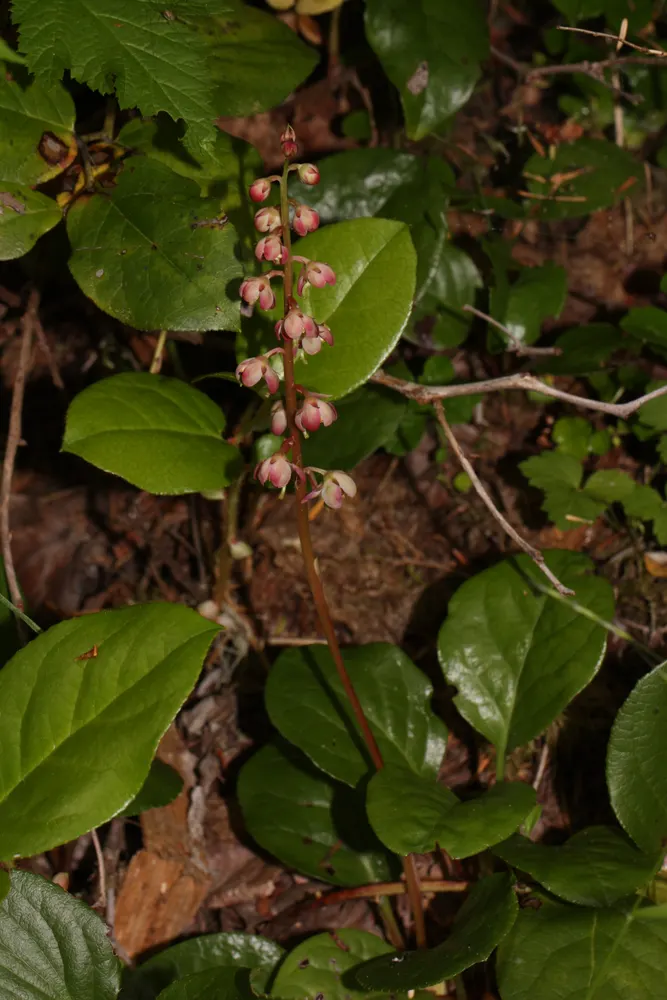
Photo: Walter Siegmund (talk), CC BY-SA 3.0 (via Wikimedia Commons)
Pink Wintergreen
Pyrola asarifolia
Also known as Liverleaf Wintergreen, Bog Wintergreen, Pink Pyrola, Shinleaf
Key benefits
✦Traditional uses
✦Across the boreal forests of North America, Pyrola asarifolia was quietly gathered by Cree, Blackfoot, Potawatomi, and many other peoples, who prized its thick, glossy leaves for tending wounds, bruises, and sores. Bound fresh against the skin or steeped into a wash, the leathery leaves earned pyrolas the old backwoods nickname shinleaf, for their long use soothing sore and battered shins along the trail. Because the plant leans on hidden partnerships with forest fungi to survive, it was never farmed or traded in bulk. It remained instead a quiet forest medicine, known mostly to those who walked closely with the woods and gathered it by hand, a leaf or two at a time.
How to grow & use it
✦The full apothecary for Pink Wintergreen
Traditional remedies and step-by-step preparations, a complete growing guide, and how to harvest, dry, and store it, all unlocked with HerbLens Unlimited.
- ✦Remedies & preparations
- ✦ Growing guide
- ✦Harvest & storage
From under $6 a month. Free plant identifications always included.
- ✦Plantain
- ✦Yarrow
- ✦Self-heal
- ✦Uva-ursi (bearberry) leaf
- ✦Wintergreen (Gaultheria procumbens)
“For the quiet, nodding pink bells found low along a shaded forest trail.”
Pyrola asarifolia takes its species name from Asarum, the wild ginger, because its round, glossy, heart-shaped leaves look remarkably similar, even though the two plants are not related at all.
Pink wintergreen's leaves contain arbutin, which can irritate the liver and kidneys with heavy or prolonged internal use, so it's traditionally kept to occasional use, not a daily tea. Avoid it if pregnant, breastfeeding, or if you have liver or kidney problems.