Photo: jillllybean, CC BY-SA 2.0 (via Wikimedia Commons)
American Bur-reed
Sparganium americanum
Also known as American Burreed, Bur-reed
Key benefits
✦Traditional uses
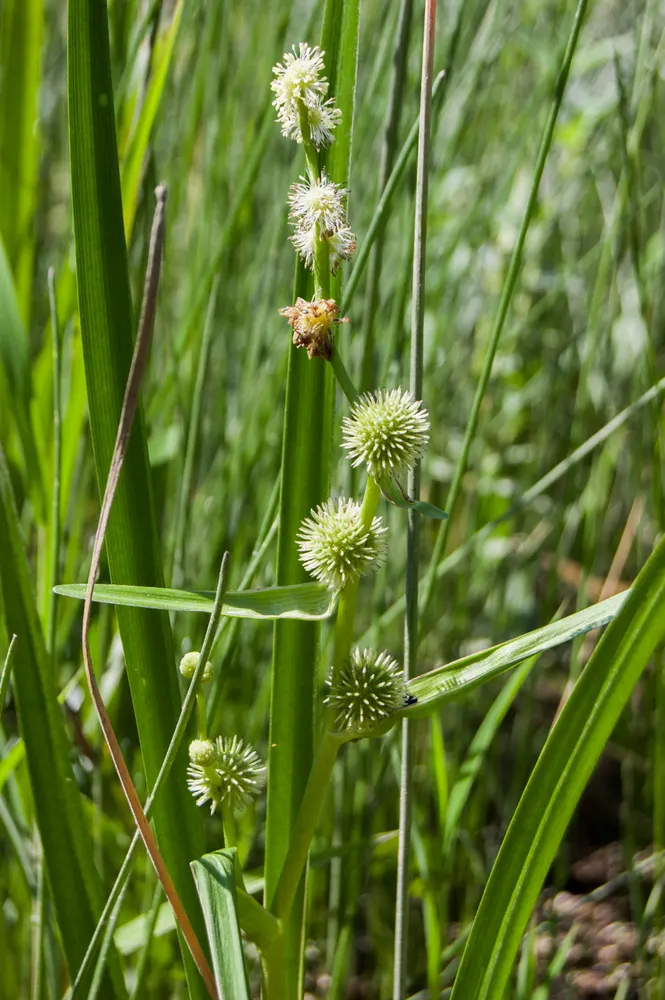
✦American bur-reed is not a plant with a documented history in the herbal medicine chest or the kitchen. Its real legacy is ecological. For as long as people have watched marshes and pond edges, they have noticed wood ducks, teal, and songbirds working over its spiky seed heads in autumn, and noticed too how its tangled roots hold soft mud in place against the pull of moving water. Restoration plantings and rain gardens have leaned on it for exactly that reason, valuing it as a quiet, working plant rather than a curative one. Its odd, bristling seed clusters, each one looking a little like a medieval mace, have also made it a favorite of foragers who gather for dried arrangements rather than for tea.
How to grow & use it
✦The full apothecary for American Bur-reed
Traditional remedies and step-by-step preparations, a complete growing guide, and how to harvest, dry, and store it, all unlocked with HerbLens Unlimited.
- ✦Remedies & preparations
- ✦ Growing guide
- ✦Harvest & storage
From under $6 a month. Free plant identifications always included.
- ✦Pickerelweed
- ✦Blue flag iris
- ✦Arrowhead
- ✦Lesser bur-reed
- ✦Broadleaf arrowhead
“For the soft, muddy fringe where a pond gives way to lawn, where something wild and green is needed to hold the bank and welcome the ducks.”
The genus name Sparganium comes from the Greek sparganon, meaning swaddling band, a nod to the plant's long, ribbon-like leaves that early botanists thought resembled strips of cloth wound around an infant.
American bur-reed has no history of use as food or medicine and grows among similar-looking wetland plants, so it should not be eaten unless positively identified.