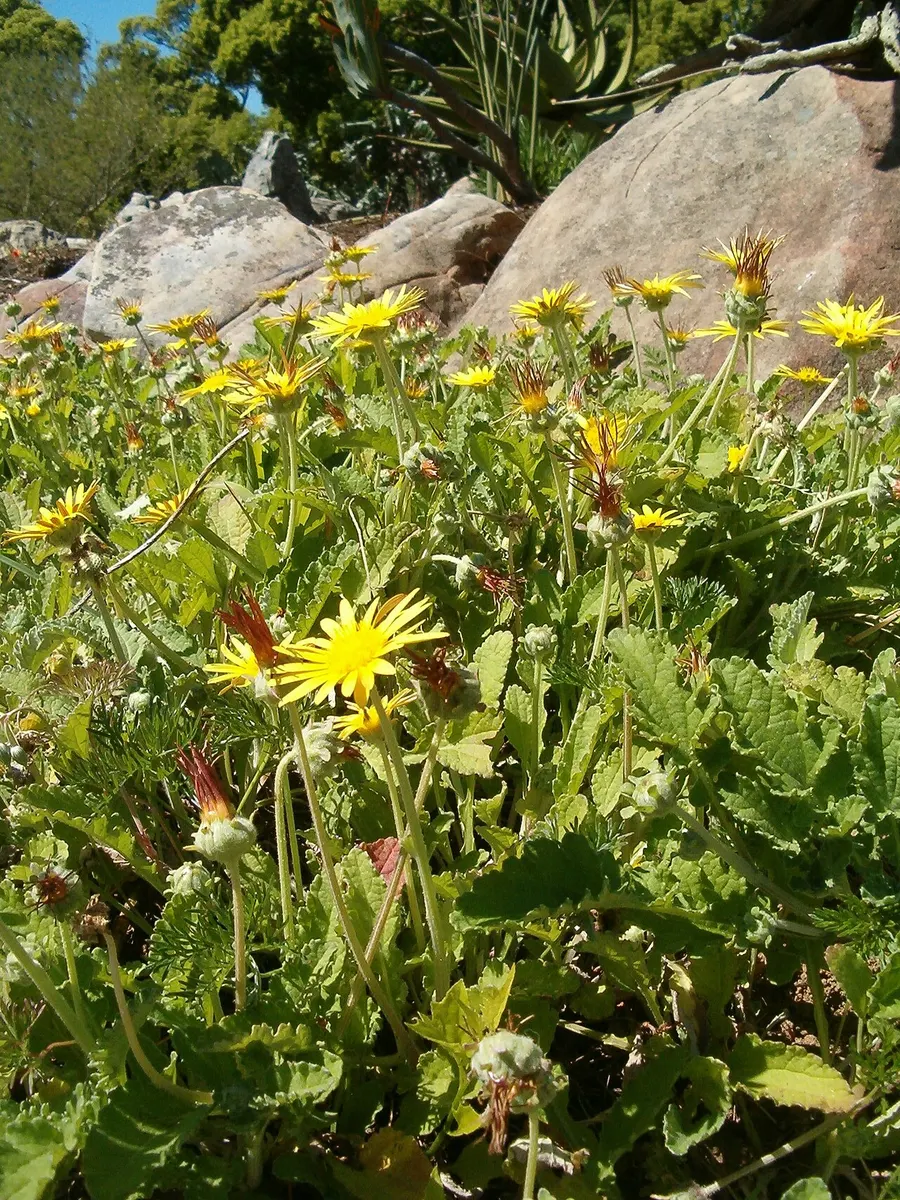
Photo: User:BotBln, CC BY-SA (via Wikimedia Commons)
African Bitter Daisy
Arctotis arctotoides
Also known as Gousblom, Wild African Daisy, Bitterbos
Key benefits
✦Traditional uses
✦Along South Africa's Cape coastline, this low, silver-leaved daisy has long been gathered by traditional herbalists as a bitter tonic, its leaves steeped to ease a heavy, sluggish stomach after a rich meal. Fresh leaves were also crushed and pressed against minor cuts, sores, and insect bites to calm irritated skin. It grew wherever little else would, carpeting dunes and rocky outcrops battered by salt wind, and that same toughness made it a dependable plant for households who kept it close at hand rather than a rare or ceremonial one. Its story is a quiet, practical one, the kind of everyday remedy passed between neighbors rather than written into formal record.
Growing guide
✦Fresh to dried
✦Traditional preparations
✦Bitter Digestive Tea
Traditionally sipped after a heavy meal to help settle a sluggish stomach, in the way many bitter herb teas have been used across folk traditions.
How it's made. Traditionally, a tea is made by steeping 1 teaspoon of the dried leaves in 250 ml of just-boiled water for 8 to 10 minutes, then strained and sipped slowly.
Fresh Leaf Poultice
Fresh leaves have traditionally been bruised and pressed against minor cuts, scrapes, or insect bites to soothe the skin.
How it's made. Traditionally, a small handful of fresh leaves is crushed lightly to release their juice and held against the affected area with a clean cloth for a few minutes.
- ✦Rooibos
- ✦Buchu
- ✦Wild Mint
- ✦Wormwood
- ✦Dandelion leaf
“For a hardy, silver-leaved bloom that has weathered Cape sea winds, and settled Cape stomachs, in equal measure.”
Its Afrikaans name, gousblom, simply means goose flower, a name shared across many of South Africa's wild daisies, but this particular species is one of the most widespread, still carpeting the same windswept dunes and rocky Cape slopes it has grown on for generations.
Limited safety data exists, so use only in modest, occasional amounts. As a daisy-family plant it may cause allergic reactions in those sensitive to ragweed or related plants, and it's best avoided in pregnancy.