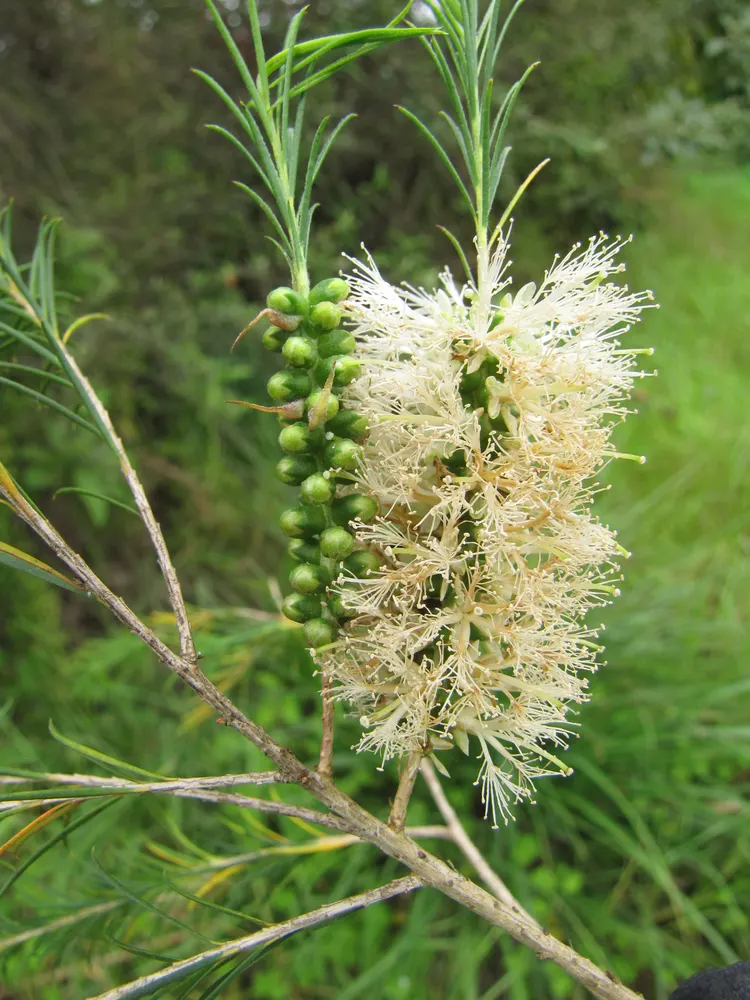
Photo: Forest and Kim Starr, CC BY 3.0 us (via Wikimedia Commons)
Bracelet Honey Myrtle
Melaleuca armillaris
Also known as Giant Honeymyrtle, Drooping Melaleuca, Cream Honeymyrtle, Bracelet Honeymyrtle
Key benefits
✦Traditional uses
✦Long before it found its way into gardens outside Australia, Melaleuca armillaris grew wild along the cliffs and riverbanks of New South Wales and Victoria, its dense, salt-tolerant branches forming natural shelter from coastal wind for whatever grew or nested behind it. Since the nineteenth century, gardeners and farmers around the world have planted it for that same purpose, raising quick, tough hedgerows along coastlines from California to the Mediterranean. Beekeepers have long favored its cream flower spikes, which open through the warmer months and draw bees for a distinctive, aromatic honey. It shares its genus with the more famous tea tree, Melaleuca alternifolia, and its crushed leaves carry a similar sharp, camphor-like scent, though this species has never built up the same documented herbal tradition as its well-studied cousin.
How to grow & use it
✦The full apothecary for Bracelet Honey Myrtle
Traditional remedies and step-by-step preparations, a complete growing guide, and how to harvest, dry, and store it, all unlocked with HerbLens Unlimited.
- ✦Remedies & preparations
- ✦ Growing guide
- ✦Harvest & storage
From under $6 a month. Free plant identifications always included.
- ✦Eucalyptus
- ✦Bottlebrush (Callistemon)
- ✦Tea tree (Melaleuca alternifolia)
- ✦She-oak (Casuarina)
- ✦Coastal rosemary (Westringia)
“For the exposed, salt-sprayed corner of the garden that needs a tough shoulder to lean on.”
Melaleuca armillaris shares its genus with true tea tree, but it was planted around the world far more for its wind-breaking branches and bee-friendly blooms than for any oil harvest. In parts of South Africa's fynbos, it has since slipped the garden fence entirely and become an aggressive wild invader, a reminder that even a well-mannered hedge plant can go rogue in the right conditions.
This tree is grown for landscaping, not food or medicine, and its oil should never be swallowed since concentrated Melaleuca oils are toxic if ingested, especially for children and pets. Crushed leaves or extracted oil can irritate sensitive skin.