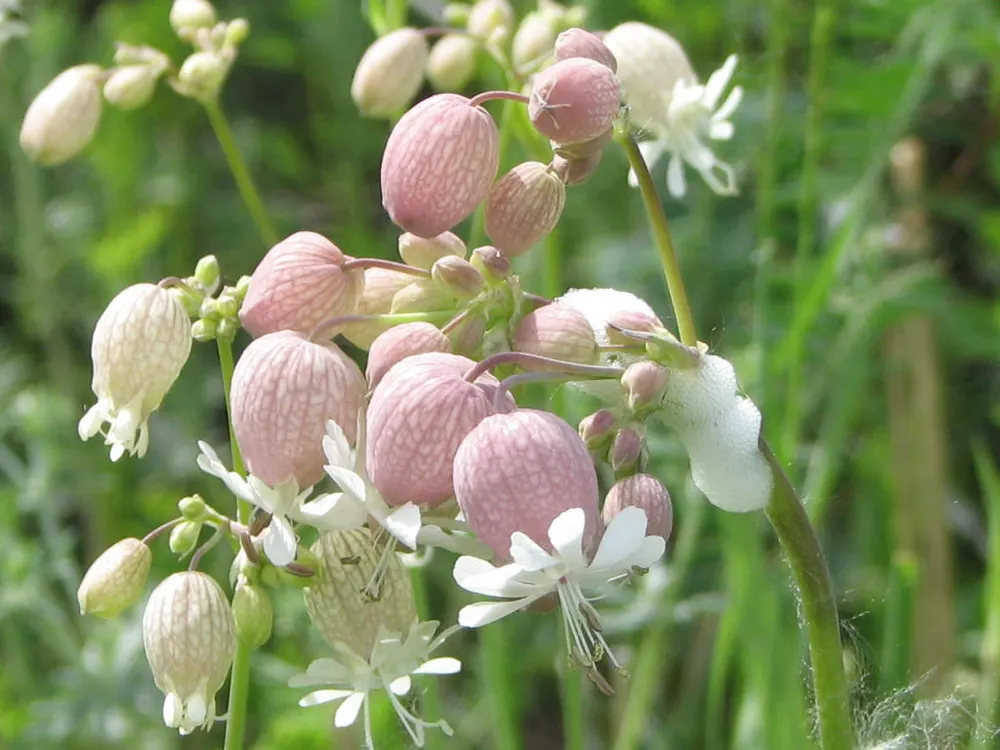
Photo: D. Gordon E. Robertson, CC BY-SA 3.0 (via Wikimedia Commons)
Bladder Campion
Silene vulgaris
Also known as Maidenstears, Cowbell, Rattleweed
Key benefits
✦Traditional uses
✦Long before it was a curiosity in wildflower guides, bladder campion was simply supper. In Crete, Italy, and across much of the Mediterranean, foragers have gathered its tender young shoots each spring for centuries, the way others might gather dandelion greens or nettles. Cretan cooks still fold it into horta, the mixed wild greens dish eaten with olive oil and lemon, while in Emilia-Romagna the shoots turn up in a beloved risotto known locally by the plant's dialect name. It was valued less as medicine and more as one of the season's first fresh, sweet bites after a long winter, a small green welcome to spring.
How to grow & use it
✦The full apothecary for Bladder Campion
Traditional remedies and step-by-step preparations, a complete growing guide, and how to harvest, dry, and store it, all unlocked with HerbLens Unlimited.
- ✦Remedies & preparations
- ✦ Growing guide
- ✦Harvest & storage
From under $6 a month. Free plant identifications always included.
- ✦Nettle
- ✦Chickweed
- ✦Dandelion greens
- ✦Spinach
- ✦Pea shoots
“For the forager's basket in early spring, when the first tender shoots taste like the season's first sweet peas.”
The plant's papery, inflated calyx, the little balloon behind each flower, is where it gets its name, and children have popped these seed cases underfoot for generations the way others pop bubble wrap. Some botanists trace the genus name Silene back to Silenus, the foam-flecked, wine-loving companion of Bacchus in Greek myth, a nod to the frothy, sticky secretions found on some of the plant's relatives.
Bladder campion's young shoots and leaves are a traditional foraged food, best cooked rather than eaten raw in quantity since the plant contains digestion-irritating saponins. Be sure of identification before foraging, as similar-looking Silene species aren't all considered edible.