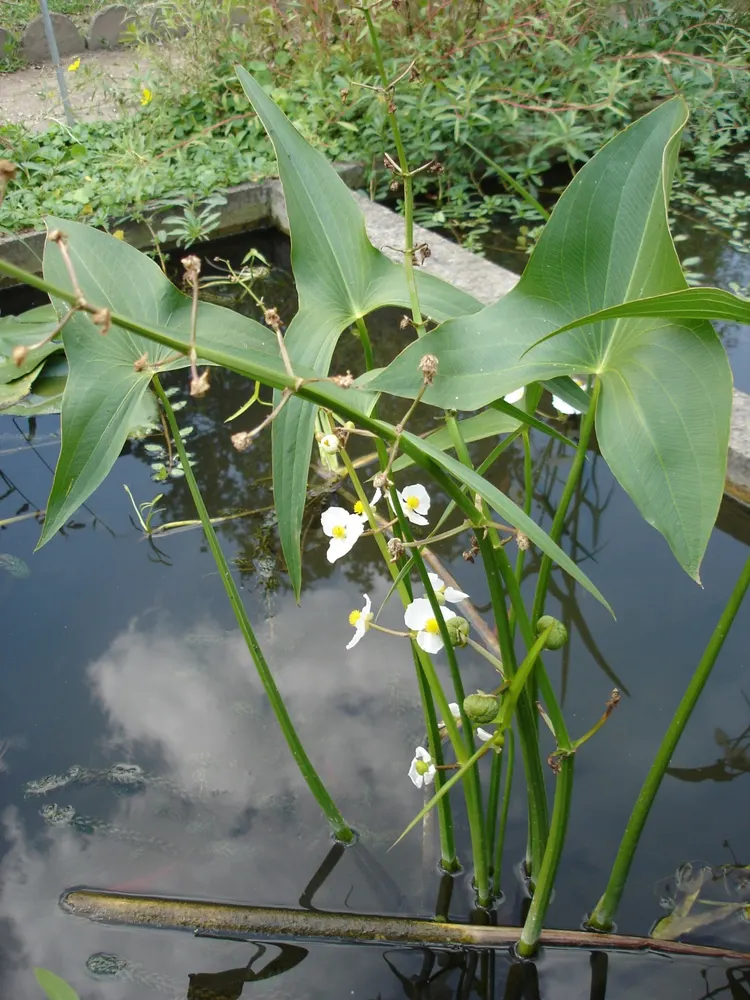
Photo: CC BY-SA 3.0 (via Wikimedia Commons)
Wapato
Sagittaria latifolia
Also known as Duck Potato, Broadleaf Arrowhead, Katniss, Indian Potato, Swan Potato
Key benefits
✦Traditional uses
✦Long before it had an English name, wapato was one of the great food plants of North America, its starchy tubers gathered by Native peoples from the Pacific Northwest to the Great Lakes and dried or stored for the lean months of winter. Coast Salish, Chinook, and other river and lakeside nations waded into cold mud in autumn, working the tubers loose with bare feet so they would bob to the surface, a harvest so central to daily life that entire villages timed their seasons around it. Meriwether Lewis and William Clark recorded whole storehouses of dried wapato traded along the Columbia River, calling it wappato in their journals and noting how thoroughly it sustained the people they met. Beyond the table, some communities also turned to the raw, split root as a poultice for wounds, sores, and stings, a small but well-remembered piece of its traditional history.
How to grow & use it
✦The full apothecary for Wapato
Traditional remedies and step-by-step preparations, a complete growing guide, and how to harvest, dry, and store it, all unlocked with HerbLens Unlimited.
- ✦Remedies & preparations
- ✦ Growing guide
- ✦Harvest & storage
From under $6 a month. Free plant identifications always included.
- ✦Cattail root
- ✦Wild rice
- ✦Watercress
- ✦Potato
- ✦Jerusalem artichoke
“For the forager wading pond's edge in autumn, gathering the buried harvest the ducks have always known about.”
Wapato tubers were harvested almost entirely by wading into cold shallows and loosening them with bare feet, letting them bob free to be scooped from the water's surface, a technique early settlers described with real astonishment.
Wapato tubers must be cooked before eating, since raw ones are acrid and hard to digest. It grows in the same wetlands as water hemlock, one of North America's most poisonous plants, so positive identification by an experienced forager is essential.