Photo: Nepenthes, CC BY-SA 3.0 (via Wikimedia Commons)
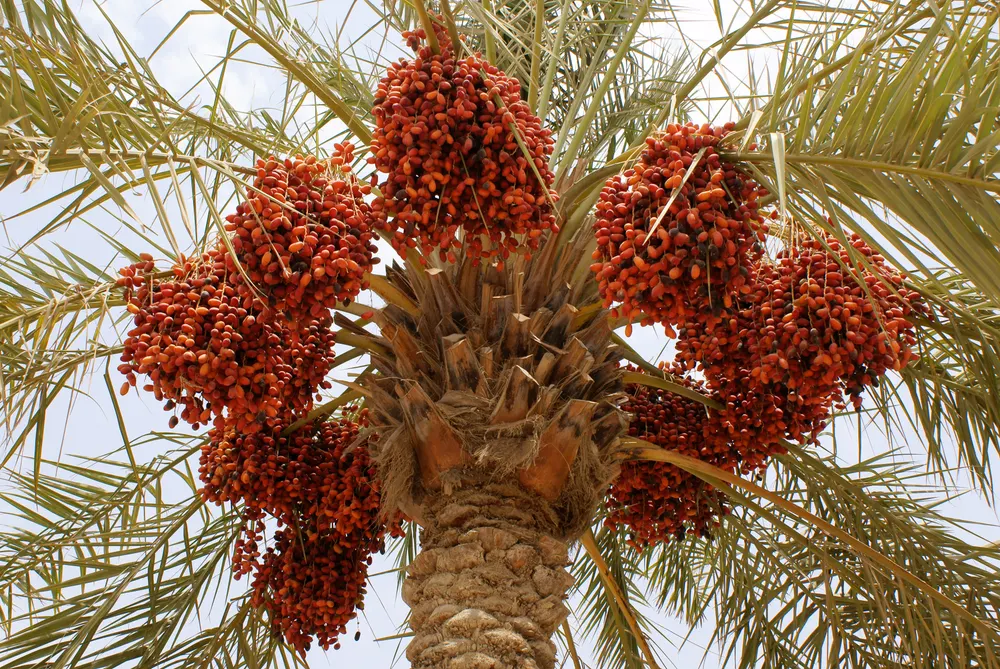
Date Palm
Phoenix dactylifera
Also known as Date, Common Date Palm, Ajwa Palm (regional cultivar), Nakhla (Arabic)
Key benefits
✦Traditional uses
✦For thousands of years the date palm has been called the tree of life along the caravan routes of Arabia and North Africa, its fruit sustaining travelers across deserts where little else would grow. Dates have long been the food used to break the daily fast during Ramadan, valued for delivering quick, steady energy after hours without eating. Across Middle Eastern and North African households, dates have traditionally been given to new mothers in the weeks around childbirth and offered to the elderly and unwell as a gentle, easily digested source of nourishment. Beyond the fruit, the sap has been tapped for a fermented palm wine in parts of Africa and Asia, and the pollen has a long folk history as a fertility tonic.
How to grow & use it
✦The full apothecary for Date Palm
Traditional remedies and step-by-step preparations, a complete growing guide, and how to harvest, dry, and store it, all unlocked with HerbLens Unlimited.
- ✦Remedies & preparations
- ✦ Growing guide
- ✦Harvest & storage
From under $6 a month. Free plant identifications always included.
- ✦Cinnamon
- ✦Ginger
- ✦Cardamom
- ✦Dried figs
- ✦Raisins
“For the deep amber sweetness of the desert, stored up sun by sun.”
In 2005, researchers germinated a 2,000-year-old date palm seed recovered from the ruins of Masada in Israel, nicknamed Methuselah. It grew into a healthy tree, making it one of the oldest seeds ever coaxed back to life.
Dates are safe to eat, but the pit is a genuine choking hazard and should always be removed. Their concentrated sugar means people managing diabetes should watch portion size, and dried dates can occasionally harbor mold, so check for an off smell before eating.