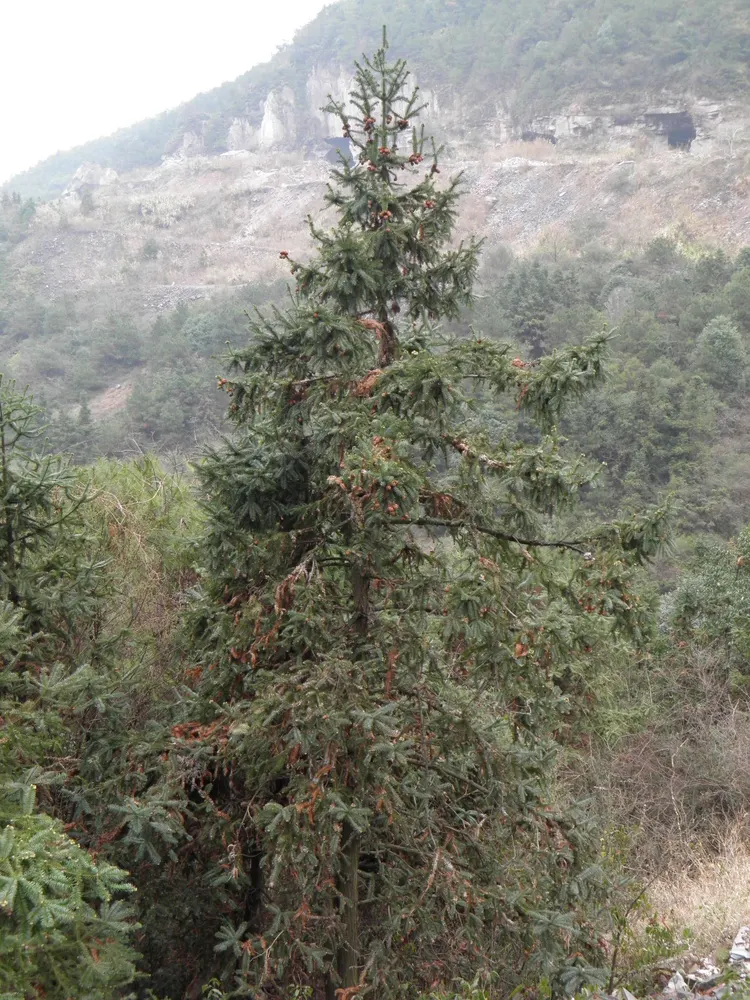
Photo: Micromesistius, CC BY-SA 3.0 (via Wikimedia Commons)
Chinese Fir
Cunninghamia lanceolata
Also known as China-fir, Shan mu, Chinese Coolie Fir
Key benefits
✦Traditional uses
✦For well over a thousand years, Chinese fir has been one of the most planted and prized timber trees in China, valued for wood that resists rot, insects, and damp far better than most conifers. Temple beams, boats, furniture, and traditional coffins were built from it precisely because the fragrant heartwood could stand up to centuries of humidity without crumbling. In folk practice, the bark was sometimes steeped or ground and applied to the skin for minor irritation and swelling, though this tree has always been prized far more as a builder's ally than a healer's herb. Villagers also learned that a cut Chinese fir stump will send up new shoots on its own, so a single planting could supply timber for generations without replanting.
How to grow & use it
✦The full apothecary for Chinese Fir
Traditional remedies and step-by-step preparations, a complete growing guide, and how to harvest, dry, and store it, all unlocked with HerbLens Unlimited.
- ✦Remedies & preparations
- ✦ Growing guide
- ✦Harvest & storage
From under $6 a month. Free plant identifications always included.
- ✦Cypress
- ✦Camphor tree
- ✦Cedar
- ✦Cedarwood
- ✦Cypress
“For the tree that has roofed temples and carried boats for a thousand years, standing tall and fragrant against the mountain mist.”
Chinese fir has been cultivated as a managed timber crop in China for more than a thousand years, and it is unusual among conifers for its ability to resprout vigorously from a cut stump, letting farmers harvest and regrow the same tree stock without ever replanting from seed.
Chinese fir bark and wood are not eaten or brewed as tea, and no safe dosing exists for internal use. Handling the raw sawdust, resin, or bark can irritate skin, eyes, or airways in sensitive people.