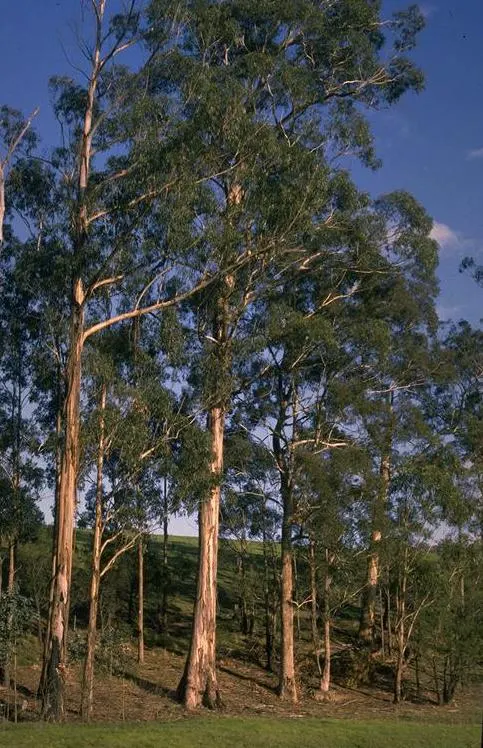
Photo: Ian Brooker and David Kleinig, CC BY 3.0 au (via Wikimedia Commons)
Blue Gum
Eucalyptus globulus
Also known as Tasmanian Blue Gum, Southern Blue Gum, Fever Tree
Key benefits
✦Traditional uses
✦Long before eucalyptus oil found its way into cough drops and chest rubs on grocery store shelves, Aboriginal Australians were already steeping and burning its leaves, using the smoke and vapor to ease fevers and breathe easier during respiratory illness. When European settlers arrived in the early 1800s, they quickly adopted the tree, calling it the fever tree and planting it near swamps and settlements in the belief that its strong-scented leaves helped purify damp, feverish air. By the Victorian era, eucalyptus leaf and its distilled oil had become a household fixture across the world for colds, congestion, and tired muscles, a reputation the tree has never quite shaken.
How to grow & use it
✦The full apothecary for Blue Gum
Traditional remedies and step-by-step preparations, a complete growing guide, and how to harvest, dry, and store it, all unlocked with HerbLens Unlimited.
- ✦Remedies & preparations
- ✦ Growing guide
- ✦Harvest & storage
From under $6 a month. Free plant identifications always included.
- ✦Peppermint
- ✦Thyme
- ✦Rosemary
- ✦Peppermint
- ✦Tea Tree
“For the cold night when your head feels full and you just want to breathe clear again.”
Koalas eat almost nothing but eucalyptus leaves, a diet so toxic and low in nutrition to most other animals that koalas sleep up to twenty hours a day just to conserve the energy needed to detoxify it.
Eucalyptus essential oil is genuinely toxic if swallowed; even a small amount can cause seizures and breathing trouble in children, so keep it away from kids and pets and never apply undiluted oil to an infant's face. It can interact with certain sedatives and liver-processed medications, and it's generally advised against during pregnancy and breastfeeding. Some people also get skin irritation from topical use.