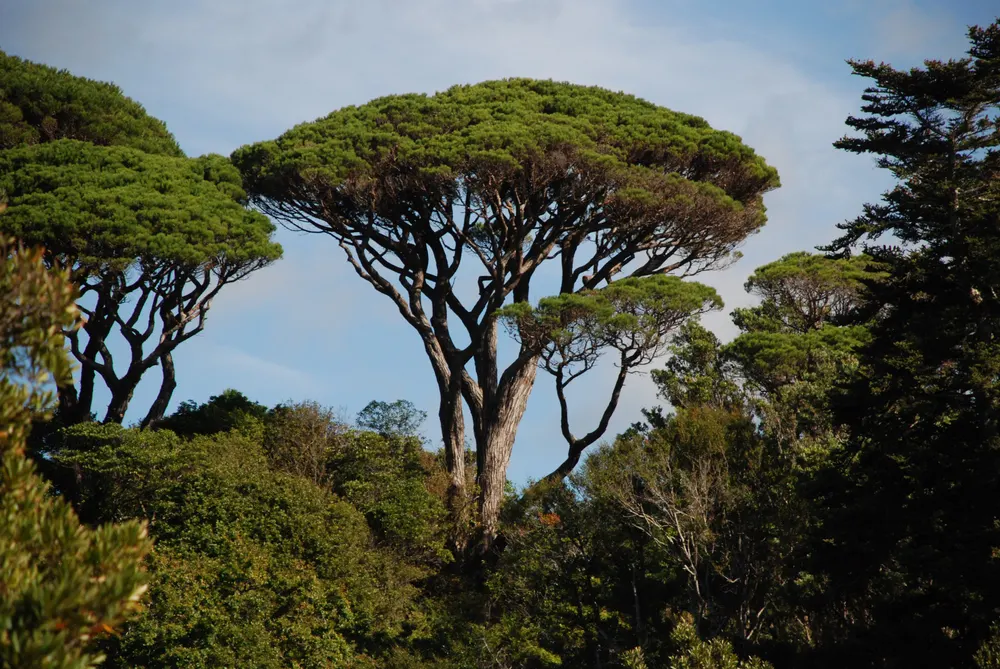
Photo: Karora, Public domain (via Wikimedia Commons)
Stone Pine
Pinus pinea
Also known as Italian Stone Pine, Umbrella Pine, Parasol Pine, Pinyon Pine of the Mediterranean
Key benefits
✦Traditional uses
✦Stone pine has fed and sheltered Mediterranean people since before Rome was a city, its broad canopy shading roadsides and villas while its cones quietly ripened overhead for three long years. The nuts, called pignoli in Italy and piñones in Spain, were a staple of the ancient diet, ground into pastes, stirred into pesto, and carried by travelers as a compact, energy-dense food that kept well on long journeys. Coastal and mountain communities also steeped the fresh young needles into a tea, a practice sailors leaned on for their vitamin C content during long voyages when fresh produce ran short, and the fragrant resin was traditionally worked into salves and rubs for the chest and for minor skin complaints. Even where the tree was not native, it was planted along avenues and gardens for its dramatic silhouette, becoming one of the most recognizable trees of the Mediterranean world.
How to grow & use it
✦The full apothecary for Stone Pine
Traditional remedies and step-by-step preparations, a complete growing guide, and how to harvest, dry, and store it, all unlocked with HerbLens Unlimited.
- ✦Remedies & preparations
- ✦ Growing guide
- ✦Harvest & storage
From under $6 a month. Free plant identifications always included.
- ✦Eucalyptus
- ✦Thyme
- ✦Rosemary
- ✦Fir needles
- ✦Spruce needles
“For the tree that turns a sun-baked Mediterranean hillside into a green parasol.”
A stone pine cone takes a full three years to ripen, one of the longest maturation times of any pine, which is part of why its nuts have always been a slow, patient harvest and a genuine luxury food.
Pine nuts are a safe, widely eaten food, though some batches, often mixed with other pine species, have caused a temporary bitter or metallic taste known as pine nut syndrome, which is harmless but unpleasant. Pine pollen can trigger seasonal allergies, and concentrated essential oil should never be taken internally; when foraging needles or resin, be sure of identification, since toxic evergreens like yew can be mistaken for pine.