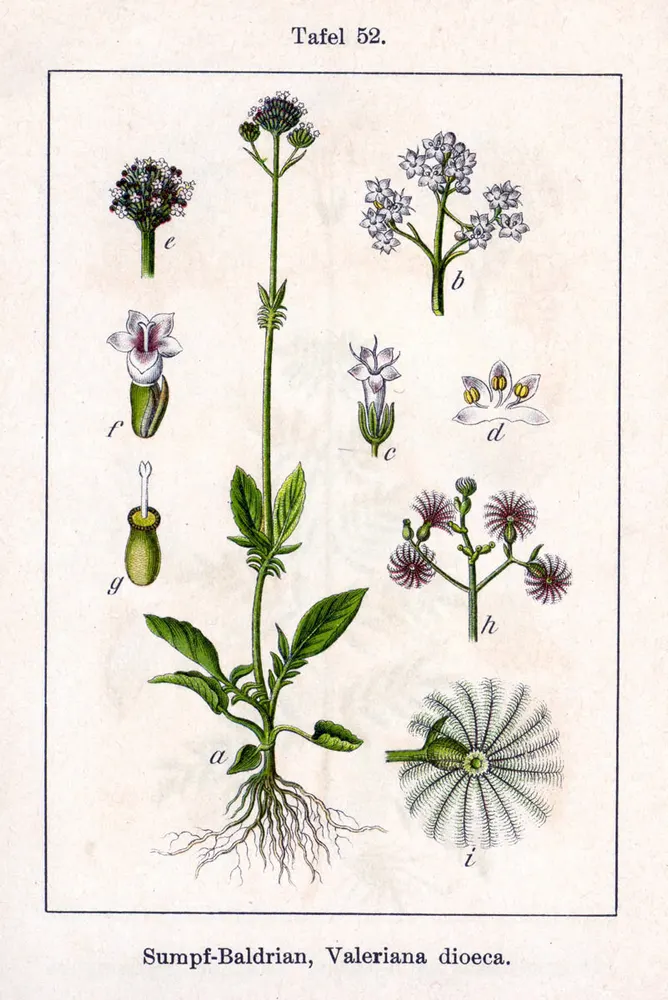
Photo: Johann Georg Sturm (Painter: Jacob Sturm), Public domain (via Wikimedia Commons)
Marsh Valerian
Valeriana dioica
Also known as Small Valerian, Marsh All-Heal
Key benefits
✦Traditional uses
✦Marsh valerian is the smaller, damp-loving cousin of the garden valerian most people know, and old European herbals mention it as a milder substitute when the true valerian root was scarce or out of season. Country herbalists dug its slender roots from wet meadows and fen margins, drying them for the same purpose their neighbors used common valerian: quieting a restless mind before sleep. Because the plant is dioecious, meaning individual plants carry either male or female flowers but never both, foragers had to know a patch well to find one bearing the seed-set roots worth digging. Its use never rivaled Valeriana officinalis in the wider herbal trade, but in the wet corners of the countryside where it grew, it earned a quiet, steady reputation as a household calming root.
How to grow & use it
✦The full apothecary for Marsh Valerian
Traditional remedies and step-by-step preparations, a complete growing guide, and how to harvest, dry, and store it, all unlocked with HerbLens Unlimited.
- ✦Remedies & preparations
- ✦ Growing guide
- ✦Harvest & storage
From under $6 a month. Free plant identifications always included.
- ✦Chamomile
- ✦Lemon balm
- ✦Hops
- ✦Valeriana officinalis (common valerian)
- ✦Hops
“When the damp, quiet corners of the meadow seem to hum with stillness, and you want that same hush before sleep.”
The species name dioica means two houses, a nod to the fact that marsh valerian plants come in separate male and female forms rather than bearing both on one plant, a trait shared by only a handful of its valerian relatives.
Marsh valerian can cause drowsiness, so avoid combining it with alcohol, sedatives, or other calming medications, and don't drive after taking it. It's best stopped a couple of weeks before surgery, since it may add to anesthesia's effects.