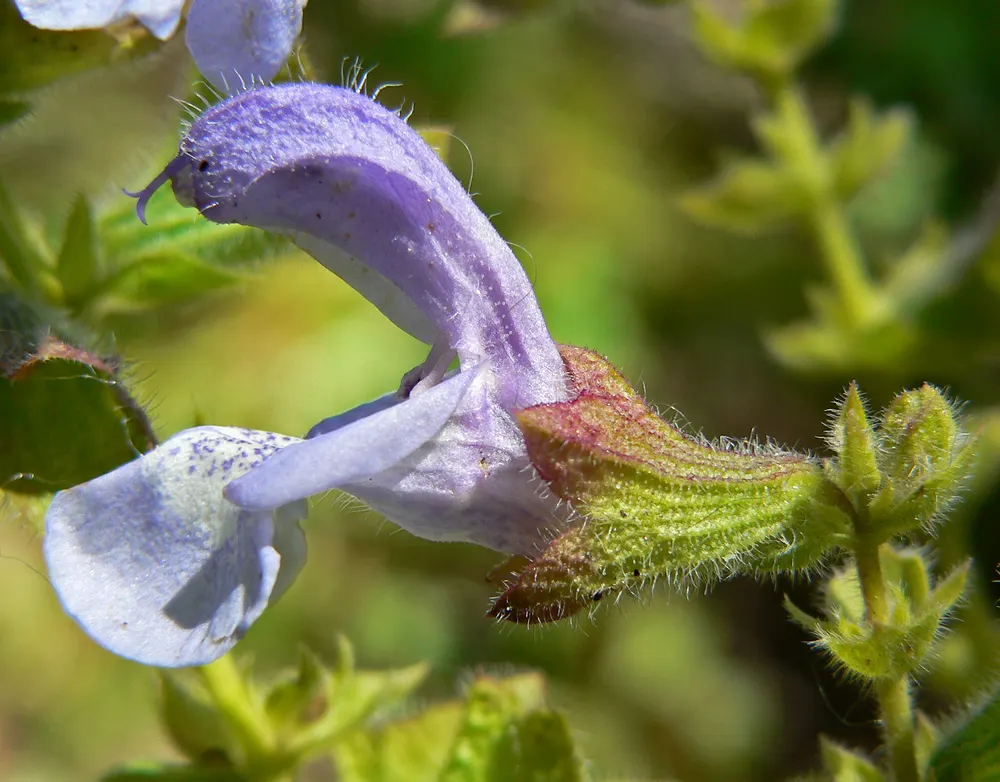
Photo: Stan Shebs, CC BY-SA 3.0 (via Wikimedia Commons)
African Sage
Salvia africana
Also known as Wild Sage, Wildesalie, Blue Sage Bush, Beach Salvia, Cape Sage
Key benefits
✦Traditional uses
✦Along South Africa's Cape coast, African sage has long been gathered from the fynbos and dried into what local households simply call wildesalie tea, brewed at the first sign of a cough, cold, or upset stomach. Khoisan and later Cape farming communities both drew on this fragrant shrub, and bundles of it were commonly hung in kitchens to scent the air and stay within easy reach. It also found a place in traditional smudging and cleansing practices, its smoke considered purifying when burned in small amounts. Today it remains a familiar dooryard plant, valued as much for its everyday usefulness as for the bees and sunbirds it draws into the garden.
Growing guide
✦Fresh to dried
✦Traditional preparations
✦Wildesalie Cough and Cold Tea
A warming infusion long used along South Africa's Western Cape at the first sign of a cough, cold, or scratchy throat.
How it's made. Traditionally, a tea is made by steeping 1 teaspoon of dried African sage leaves in 250 ml of just-boiled water for 8 to 10 minutes, then strained and sipped warm, often with a little honey.
After-Meal Digestive Infusion
A lighter, everyday cup traditionally taken after a heavy meal to help settle the stomach.
How it's made. Steep 1/2 teaspoon of dried leaf in 250 ml of hot water for about 5 minutes, then strain and drink slowly.
- ✦Honeybush
- ✦Rooibos
- ✦Lemon or lemon verbena
- ✦Common garden sage (Salvia officinalis)
- ✦Thyme
“For the herb that smells like sea wind and dry fynbos hillsides, and has warmed Cape kitchens and coughs for generations.”
Along South Africa's Cape coast, this shrub is simply called wildesalie, or 'wild sage,' and bundles of it were traditionally hung to dry in farmhouse kitchens long before it ever reached a garden catalog abroad.
African sage has no significant reported toxicity as a mild tea; just don't confuse it with the unrelated, psychoactive Salvia divinorum.