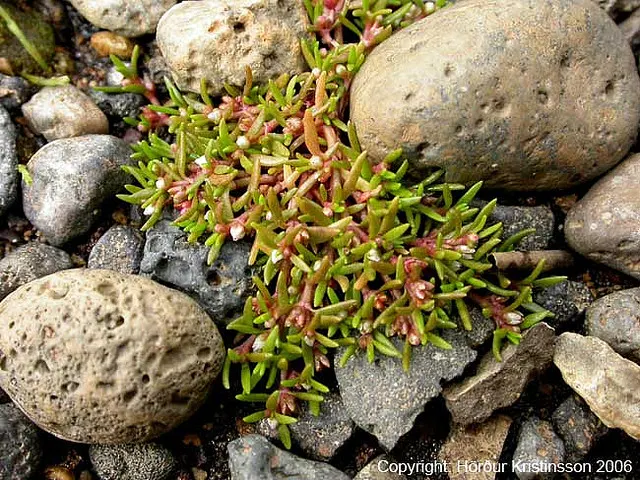
Photo: Hörður Kristinsson from Eyjafjarðarsveit, Island, CC BY 2.0 (via Wikimedia Commons)
Water Pygmyweed
Crassula aquatica
Also known as Pigmyweed, Pygmyweed, Swamp Stonecrop, Water Stonecrop, Tillaea aquatica
Key benefits
✦Traditional uses
✦Water Pygmyweed does not carry a documented history in herbal medicine or folk remedy the way many of its succulent cousins do. It is a plant botanists and wetland naturalists know well, a modest little colonizer that appears on freshly exposed mud after a pond drops or a shoreline recedes, then vanishes again as quickly as it came. Its real story is ecological rather than medicinal, a small green stitch in the fabric of a healthy wetland edge, offering forage and cover to the tiny creatures that share its muddy world. Because no reliable tradition of ingestion or topical use has come down to us, this entry stays with what can be said honestly: it is a plant to observe, not to prepare.
How to grow & use it
✦The full apothecary for Water Pygmyweed
Traditional remedies and step-by-step preparations, a complete growing guide, and how to harvest, dry, and store it, all unlocked with HerbLens Unlimited.
- ✦Remedies & preparations
- ✦ Growing guide
- ✦Harvest & storage
From under $6 a month. Free plant identifications always included.
“For the quiet places where pond meets mud, and the smallest green things go unnoticed until you kneel down to look.”
Crassula aquatica belongs to the same succulent family as jade plants and hens-and-chicks, a group famous for hoarding water against drought. Its little wetland relative does the opposite, spending much of its life fully submerged or rooted in soggy mud, an amphibious oddball in a family built for dry spells.
This small aquatic plant has no history of food or medicine use and no established safety data, so it isn't eaten or used as a remedy.