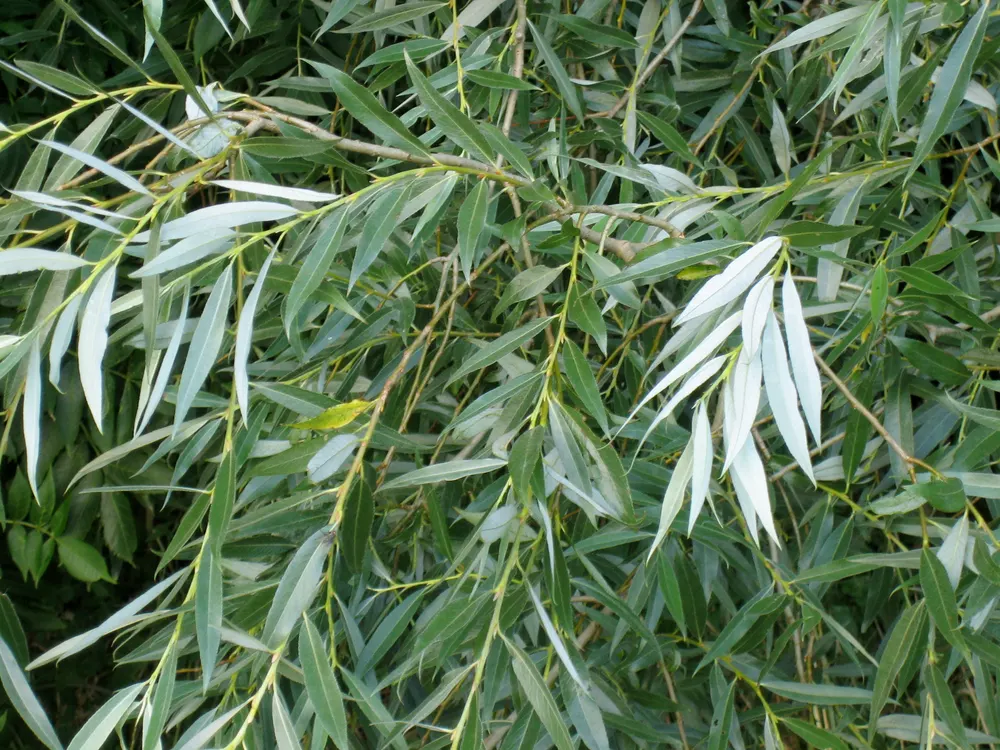
Photo: MPF, CC BY-SA 3.0 (via Wikimedia Commons)
White Willow
Salix alba
Also known as European Willow, Salicin Willow, Withy
Key benefits
✦Traditional uses
✦Willow bark is one of the oldest pain remedies on record, with Egyptian papyri and the writings of Hippocrates both describing bark or leaves chewed or brewed to dull pain and bring down fever. Traditional healers across Europe and Asia relied on it for headaches, low back pain, and the general ache of overwork long before its active compound, salicin, was isolated in the 1820s and later refined into aspirin. It became a household standby wherever willows grew along the rivers, valued as a gentler, slower-acting cousin to the medicine it eventually inspired.
How to grow & use it
✦The full apothecary for White Willow
Traditional remedies and step-by-step preparations, a complete growing guide, and how to harvest, dry, and store it, all unlocked with HerbLens Unlimited.
- ✦Remedies & preparations
- ✦ Growing guide
- ✦Harvest & storage
From under $6 a month. Free plant identifications always included.
- ✦Meadowsweet
- ✦Ginger
- ✦Turmeric
- ✦Meadowsweet
- ✦Birch bark
“For that old, unhurried kind of relief, the sort riverside healers leaned on long before the pharmacy existed.”
When chemists finally isolated the active compound in willow bark, they named it salicin after the tree's genus, Salix, and it became the starting point for the synthesis of aspirin generations later.
Willow bark contains salicin, which the body converts into aspirin-like compounds, so avoid it if you're allergic to aspirin or salicylates, and don't give it to children or teens recovering from a viral illness due to Reye's syndrome risk. It can increase bleeding risk, so avoid it with blood-thinning medication or before surgery, and it's best avoided during pregnancy or with a history of stomach ulcers.