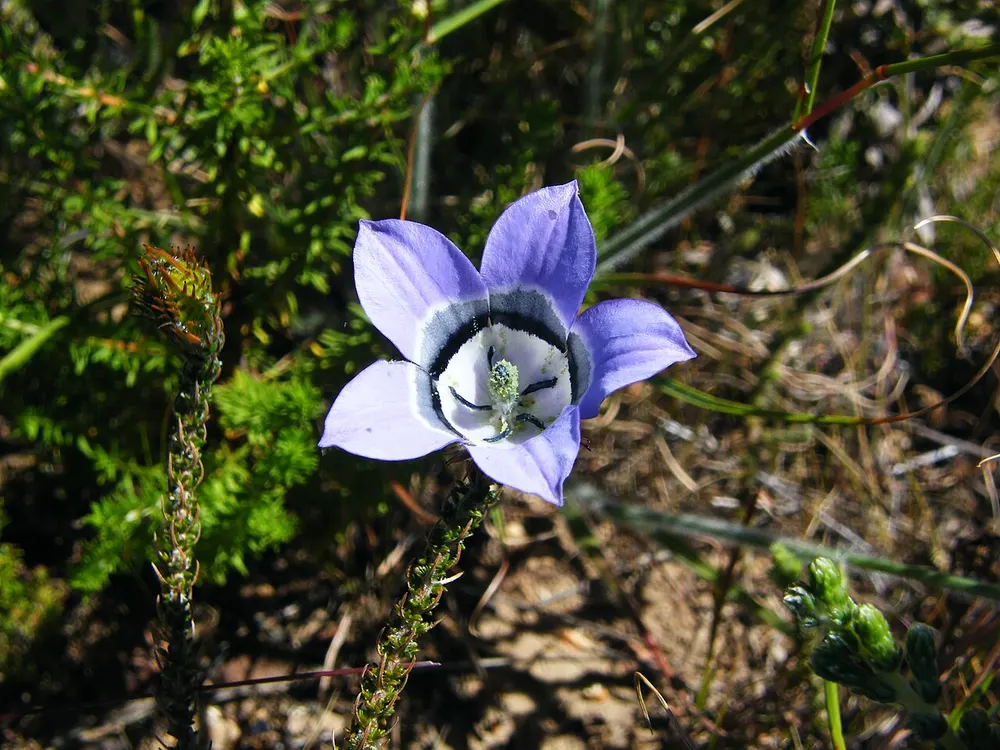
Photo: Andrew massyn, CC BY-SA 3.0 (via Wikimedia Commons)
Fringed Bellflower
Roella ciliata
Also known as Ciliate Roella
Key benefits
✦Traditional uses
✦Roella ciliata belongs to a small, distinctly South African genus of the bellflower family, and it does not carry a documented history in folk medicine or the kitchen the way many herbs in this encyclopedia do. Its story instead belongs to the botanists and plant hunters of the Cape, who prized it among the extraordinary diversity of the fynbos, one of the richest and smallest floral kingdoms on Earth. Gardeners drawn to Cape flora still grow it today for the quiet charm of its fringed blue stars rather than for any remedy, and that ornamental and conservation value is its true traditional role. Because no reliable record of medicinal or culinary use exists for this species, none should be assumed or improvised.
How to grow & use it
✦The full apothecary for Fringed Bellflower
Traditional remedies and step-by-step preparations, a complete growing guide, and how to harvest, dry, and store it, all unlocked with HerbLens Unlimited.
- ✦Remedies & preparations
- ✦ Growing guide
- ✦Harvest & storage
From under $6 a month. Free plant identifications always included.
“For a whisper of Cape blue that no ordinary garden holds.”
The genus Roella was named by Carl Linnaeus to honor Wilhelm Roell, a Dutch professor of botany in Amsterdam, while the species name ciliata simply describes the fine, hair-like fringe (cilia) along its petals and leaves, the very feature that gives this little Cape wildflower its delicate look.
No food or medicinal use is documented for fringed bellflower; treat it as an ornamental only and keep it away from children and pets who might chew on it.