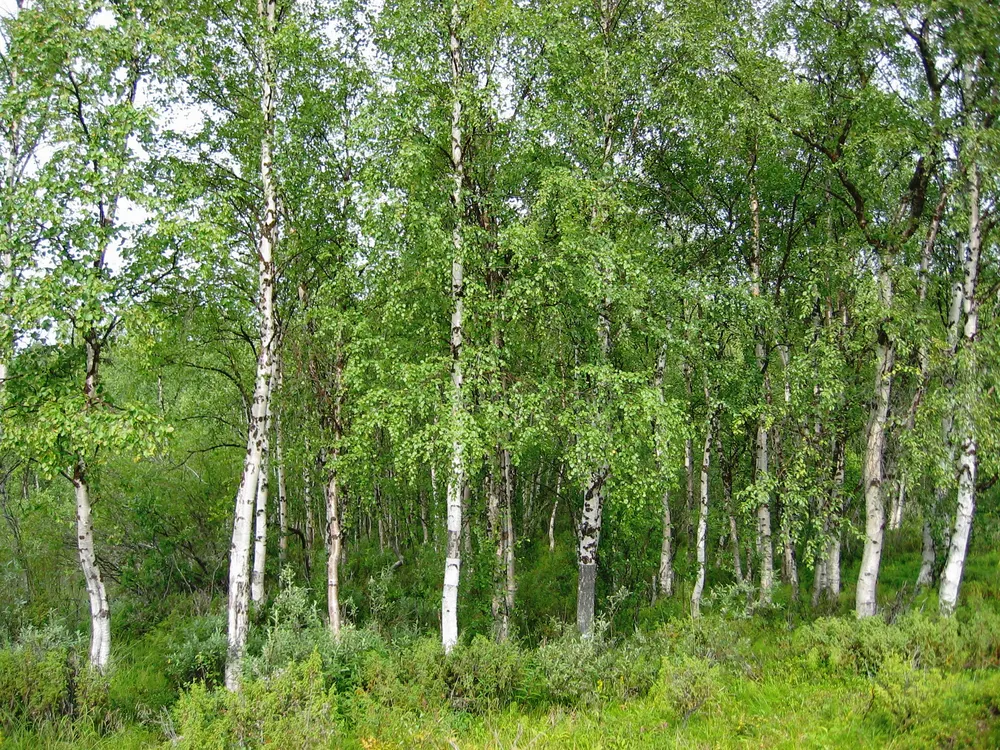
Photo: Percita at Flickr, CC BY-SA 2.0 (via Wikimedia Commons)
Silver Birch
Betula pendula
Also known as European White Birch, Warty Birch, Weeping Birch, Lady of the Woods
Key benefits
✦Traditional uses
✦Long before it lined avenues and gardens, the silver birch was one of the first trees European foragers turned to each spring, its young leaves gathered for a tea believed to flush the system and welcome the new season after a long winter. Folk herbalists across Scandinavia, Britain, and Russia used birch leaf infusions to support the kidneys and ease the stiffness of rheumatic joints, while the sap, tapped from the trunk in earliest spring, was drunk fresh as a tonic or fermented into a light wine. Birch bark, rich in resins, found its way into salves and washes for the skin, and its papery layers were even used as a writing surface and fire starter by travelers who had nothing else at hand. It is a tree woven as much into daily survival as into the herbal tradition.
How to grow & use it
✦The full apothecary for Silver Birch
Traditional remedies and step-by-step preparations, a complete growing guide, and how to harvest, dry, and store it, all unlocked with HerbLens Unlimited.
- ✦Remedies & preparations
- ✦ Growing guide
- ✦Harvest & storage
From under $6 a month. Free plant identifications always included.
- ✦Nettle
- ✦Dandelion leaf
- ✦Cleavers
- ✦Nettle leaf
- ✦Dandelion leaf
“When you crave a light spring cleanse and the woods still smell of new leaves.”
A lump of chewing gum found in Sweden, made from birch bark tar and bearing the tooth marks of whoever chewed it, has been dated to more than 9,000 years old, making birch tar one of the oldest known human-made materials still showing signs of everyday use.
Birch pollen is a common allergen and can trigger oral allergy syndrome with apples, hazelnuts, or stone fruits in sensitive people. Its leaf has a diuretic effect, so it is best avoided with heart or kidney conditions, in pregnancy, or alongside diuretic medication.