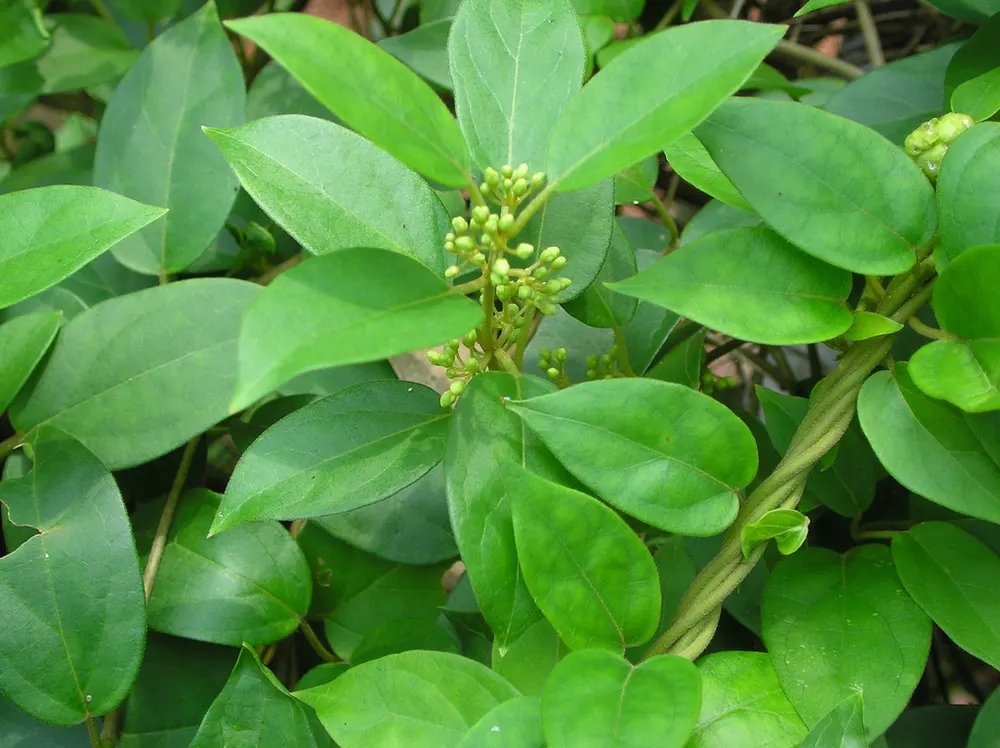
Photo: Lalithamba from India, CC BY 2.0 (via Wikimedia Commons)
Gymnema (Gurmar)
Gymnema sylvestre
Also known as Gurmar, Sugar Destroyer, Australian Cowplant, Periploca of the Woods, Meshasringi
Key benefits
✦Traditional uses
✦In Ayurvedic medicine, Gymnema sylvestre has been called Gurmar for centuries, a Hindi name that translates roughly to sugar destroyer, earned because chewing the fresh leaf temporarily dulls the tongue's ability to taste sweetness. Practitioners traditionally turned to it to support healthy blood sugar balance and to help curb a persistent sweet tooth, often alongside other bitter digestive herbs. It also holds a long history of traditional use as a digestive bitter and general tonic in classical Ayurvedic formulas. Today it remains one of the most studied herbs in Ayurvedic tradition, prized by herbalists long before modern researchers took an interest in its unusual sweetness-blocking compounds.
How to grow & use it
✦The full apothecary for Gymnema (Gurmar)
Traditional remedies and step-by-step preparations, a complete growing guide, and how to harvest, dry, and store it, all unlocked with HerbLens Unlimited.
- ✦Remedies & preparations
- ✦ Growing guide
- ✦Harvest & storage
From under $6 a month. Free plant identifications always included.
- ✦Fenugreek
- ✦Cinnamon
- ✦Bitter melon
- ✦Fenugreek leaf
- ✦Bitter melon leaf
“For the herb that quiets the call of sugar and lets the tongue rest from sweetness.”
If you chew a fresh gymnema leaf and then bite into a piece of chocolate or a spoonful of sugar, you will taste almost nothing sweet at all, sometimes for close to an hour. The leaf's unique molecules temporarily block the tongue's sweet receptors, a party trick Ayurvedic practitioners noticed and put to use long before scientists understood why it worked.
Traditionally used to lower blood sugar, so it can raise the risk of hypoglycemia when combined with insulin or diabetes medication. Not recommended in pregnancy or breastfeeding due to insufficient safety data.