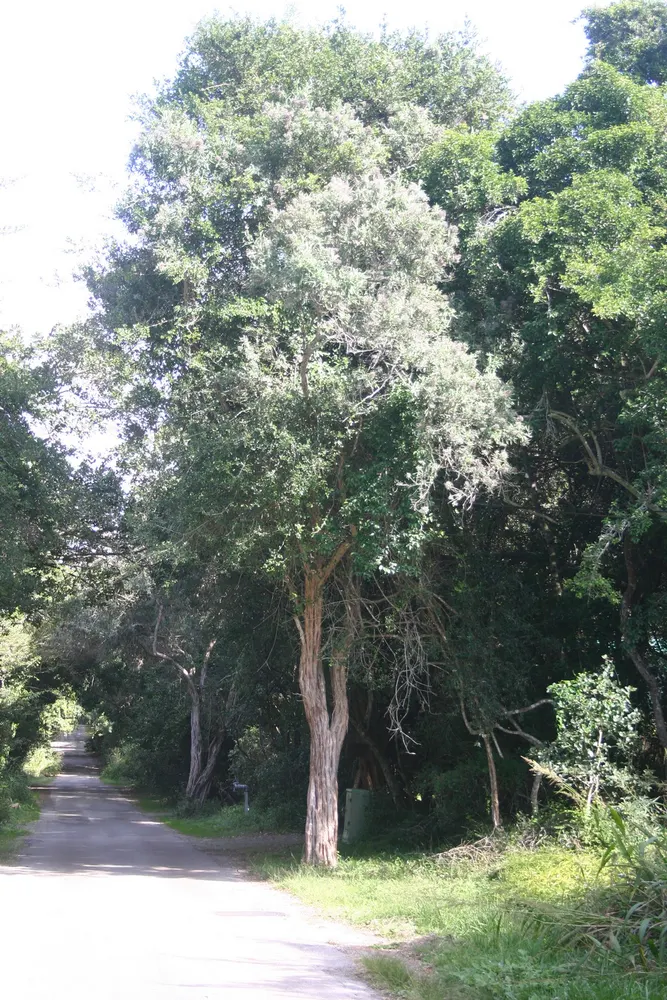
Photo: Paul venter, CC BY-SA 3.0 (via Wikimedia Commons)
False Olive
Buddleja saligna
Also known as Bastard Olive, Cape False Olive, Bosvlier (Afrikaans), iGqeba-elimhlophe (Zulu), Chilianthus oleaceus
Key benefits
✦Traditional uses
✦Long before it found its way into gardens abroad, False Olive grew wild across the hills and riverbanks of southern Africa, where Zulu and Xhosa healers gathered its narrow, olive-like leaves for coughs, colds, and sore mouths. A leaf infusion was traditionally sipped to ease a tight chest, and the same brew was often cooled and used as a gargle for toothache and mouth complaints. Beyond the sickroom, the shrub earned its keep as a farmyard staple, its tough, pale wood shaped into yokes, tool handles, and fence posts that shrugged off termites for years. Today it is prized just as much for its honey fragrance and its willingness to thrive where little else will.
How to grow & use it
✦The full apothecary for False Olive
Traditional remedies and step-by-step preparations, a complete growing guide, and how to harvest, dry, and store it, all unlocked with HerbLens Unlimited.
- ✦Remedies & preparations
- ✦ Growing guide
- ✦Harvest & storage
From under $6 a month. Free plant identifications always included.
- ✦African Wormwood (Artemisia afra)
- ✦Honey
- ✦Cape Chamomile
- ✦African Wormwood (Artemisia afra)
- ✦Wild Camphor Bush (Tarchonanthus camphoratus)
“For the hedge that quietly hums with bees and has soothed coughs and sore mouths for generations.”
The species name saligna means willow-like, a nod to the narrow, glossy leaves that first led early botanists to confuse this shrub with true olive trees, even though the two are not related at all.
Not well studied by modern science, so its safety profile and appropriate dosing are not firmly established; avoid internal use during pregnancy, nursing, or for young children. Discontinue use if irritation or nausea occurs.