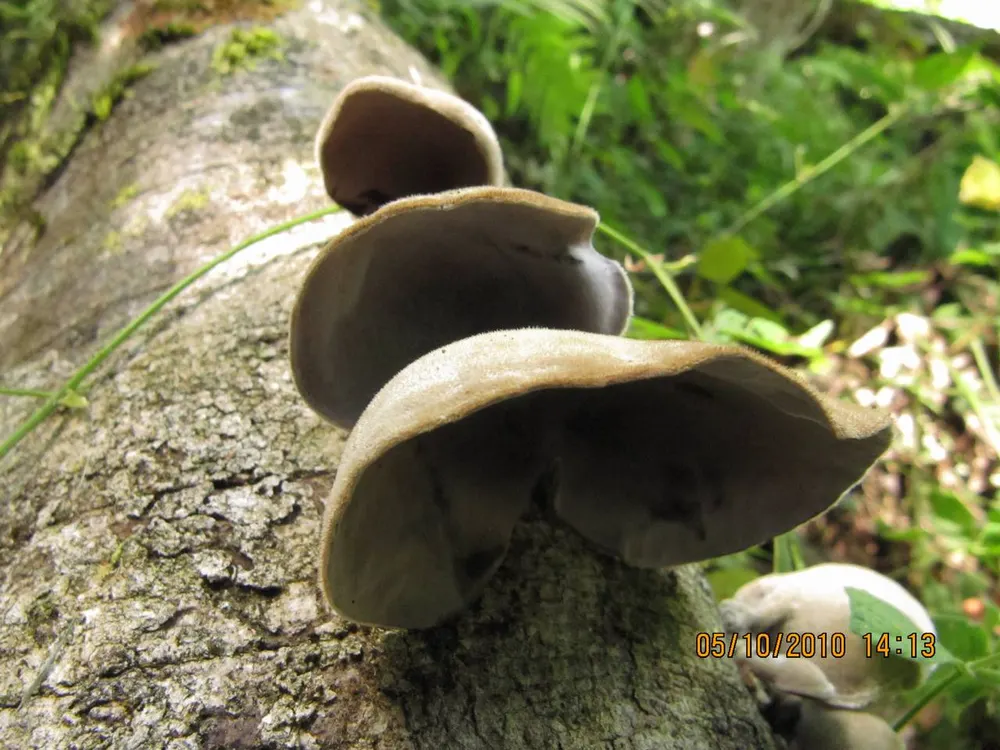
Photo: This image was created by user Herbario Nacional de Bolivia - Univ. Mayor de San Andrés (LPB.UMSA) at Mushroom Observer, a source for mycological images.You can contact this user here., CC BY-SA 3.0 (via Wikimedia Commons)
Wood Ear
Auricularia polytricha
Also known as Cloud Ear Fungus, Black Fungus, Mu Er, Jelly Ear
Key benefits
✦Traditional uses
✦In Traditional Chinese Medicine, wood ear has long been treated as a food and a medicine at once, valued for nourishing the blood and helping keep circulation moving smoothly. Cooks and healers across China and Southeast Asia have folded it into soups and tonics for generations, drawn to it as much for its gentle, restorative reputation as for its remarkable, almost gelatinous bite. It was often given to those recovering from illness or fatigue, tucked into warming broths meant to rebuild strength. Because it grows abundantly on fallen wood and dries beautifully for long storage, it became a pantry staple long before it reached kitchens outside Asia.
How to grow & use it
✦The full apothecary for Wood Ear
Traditional remedies and step-by-step preparations, a complete growing guide, and how to harvest, dry, and store it, all unlocked with HerbLens Unlimited.
- ✦Remedies & preparations
- ✦ Growing guide
- ✦Harvest & storage
From under $6 a month. Free plant identifications always included.
- ✦Ginger
- ✦Red dates (jujube)
- ✦Goji berry
- ✦Cloud ear fungus (Auricularia auricula-judae)
- ✦Shiitake mushroom (for texture in cooking)
“For the dish that needs a texture no vegetable can give, crunch that melts into silk, drawn from a fungus trusted for centuries to nourish as much as it satisfies.”
The genus name Auricularia comes from the Latin auricula, meaning little ear, a nod to the fungus's uncanny resemblance to a human ear growing sideways out of a log.
Wood ear is a safe, widely eaten food when thoroughly cooked, but should not be eaten raw or undercooked, since rare cases of skin sun-sensitivity have followed eating large raw amounts. It has mild blood-thinning properties, so use caution with anticoagulant medication or before surgery.