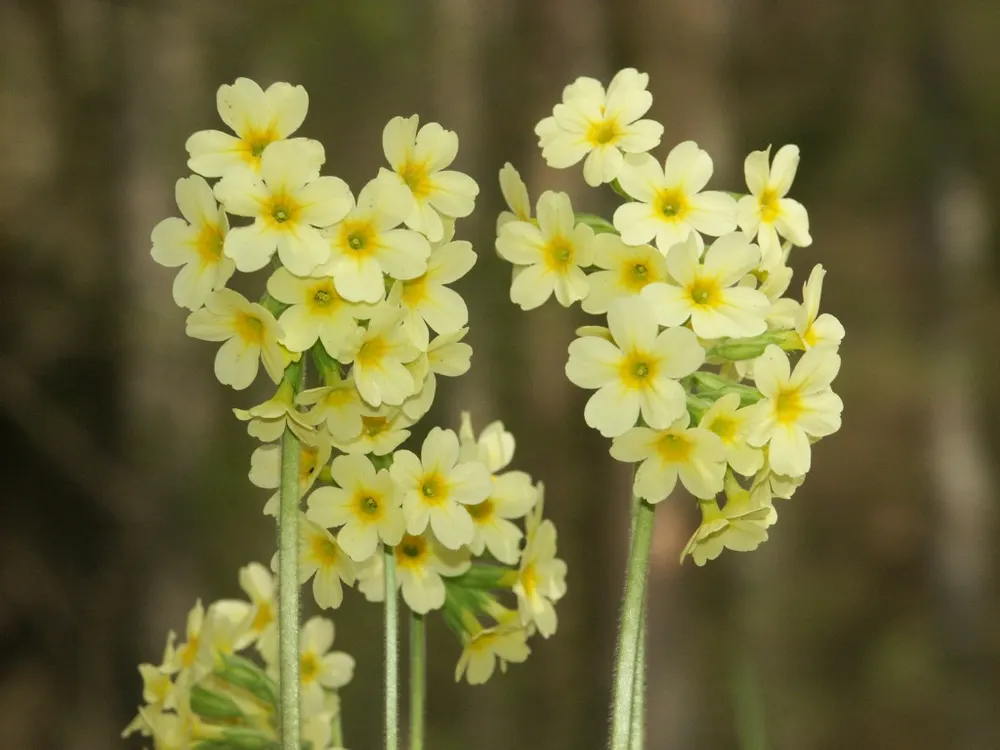
Photo: CC BY-SA 3.0 (via Wikimedia Commons)
Oxlip
Primula elatior
Also known as True Oxlip, Paigle, Primrose Cowslip
Key benefits
✦Traditional uses
✦Oxlip stands at the quiet crossroads between its two more famous cousins, the primrose and the cowslip, and country herbalists often used it interchangeably with both. Its pale yellow, faintly nodding flowers were gathered each spring and dried for winter teas meant to ease a rattling chest or a stubborn cough. In old European household remedy books, oxlip flowers were steeped alongside honey as a comforting drink for restless nights and seasonal colds. It was never a headline herb, more a dependable hedgerow friend, tucked into the same baskets as violets and coltsfoot during the spring gathering season.
How to grow & use it
✦The full apothecary for Oxlip
Traditional remedies and step-by-step preparations, a complete growing guide, and how to harvest, dry, and store it, all unlocked with HerbLens Unlimited.
- ✦Remedies & preparations
- ✦ Growing guide
- ✦Harvest & storage
From under $6 a month. Free plant identifications always included.
- ✦Cowslip
- ✦Thyme
- ✦Elderflower
- ✦Cowslip (Primula veris)
- ✦Primrose (Primula vulgaris)
“For the hush of an April woodland, brought indoors as a small cup of comfort.”
Oxlip gets its name from an old belief that the nodding flower heads resembled the shape of an ox's tongue or footprint, and in medieval England the plant was so entwined with spring that its blooming was used as an informal signal that the last frost had likely passed.
Handling fresh oxlip foliage can cause mild contact dermatitis in sensitive people. The root contains natural salicylates, so it should be avoided by anyone with an aspirin allergy, a bleeding disorder, or on blood-thinning medication.