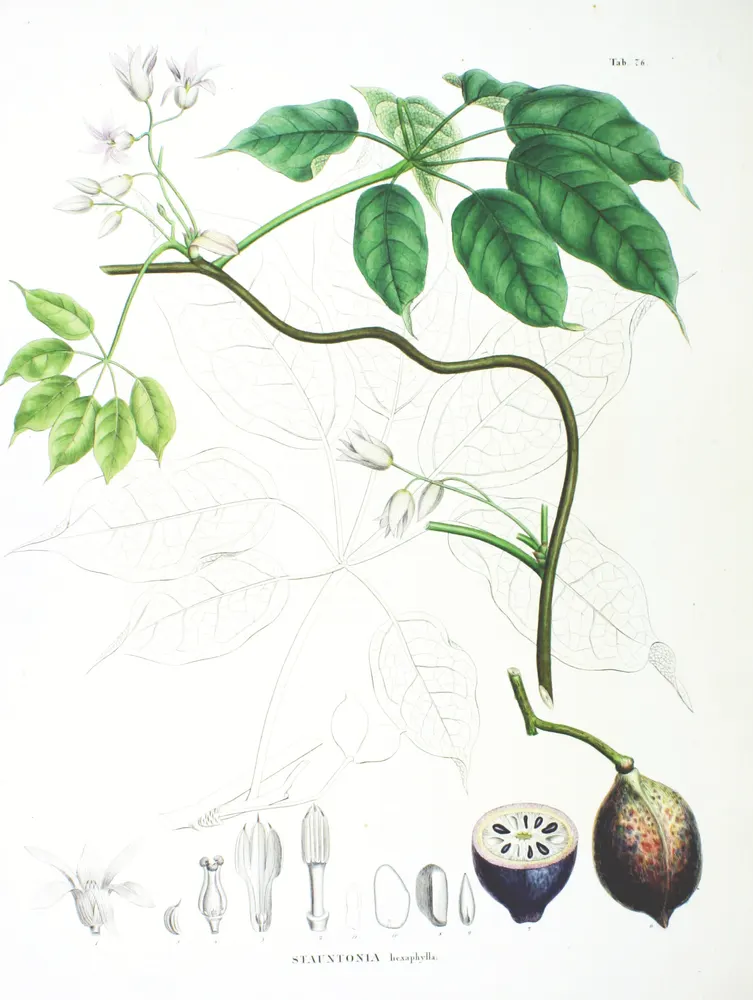
Photo: Philipp Franz von Siebold and Joseph Gerhard Zuccarini, Public domain (via Wikimedia Commons)
Mube Vine (Stauntonia)
Stauntonia hexaphylla
Also known as Mube, Japanese Stauntonia Vine, Ubebi, Ubi
Key benefits
✦Traditional uses
✦In Japan, the mube vine has been quietly beloved for centuries, its glossy palmate leaves trained over garden gates and its purple, egg-shaped fruit gathered each autumn for the sweet, translucent pulp inside. Unlike its cousin the akebia, whose fruit splits wide open when ripe, mube fruit stays closed, so pickers learn to judge ripeness by a gentle give in the skin and a deepening color. The vine's tough, pliable stems were also worked into cordage and basketry in old rural households, a practical companion to its ornamental and edible charms. Its lasting fame, though, comes from a story of imperial favor that turned a humble woodland fruit into a symbol of long life.
How to grow & use it
✦The full apothecary for Mube Vine (Stauntonia)
Traditional remedies and step-by-step preparations, a complete growing guide, and how to harvest, dry, and store it, all unlocked with HerbLens Unlimited.
- ✦Remedies & preparations
- ✦ Growing guide
- ✦Harvest & storage
From under $6 a month. Free plant identifications always included.
- ✦Yuzu
- ✦Persimmon
- ✦Chestnut
- ✦Akebia quinata (chocolate vine)
- ✦Passionfruit
“For the gardener who wants an evergreen vine that perfumes the spring air and hands back a taste of old Japanese folklore each autumn.”
Legend holds that Emperor Tenji, tasting mube fruit near Lake Biwa in the 7th century, met an elderly local couple who credited their vigor to eating it, and was so struck by the story that mube fruit from that region has been sent to Japan's Imperial Household as an annual tribute ever since.
This vine's fruit has long been eaten fresh in Japan with no reports of toxicity, though the thick skin and seeds are usually discarded. As with any wild fruit, be sure of identification before tasting, since similar-looking vines share its habitat.