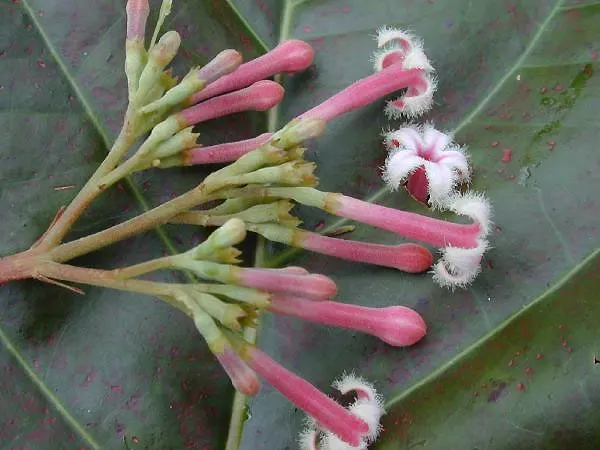
Photo: Public domain (via Wikimedia Commons)
Red Cinchona
Cinchona pubescens
Also known as Jesuit's Bark, Peruvian Bark, Fever Tree, Quina Roja, Cascarilla Roja
Key benefits
✦Traditional uses
✦Long before European ships ever reached South America, Quechua healers in the Andean foothills understood the bark of the cinchona tree as a treatment for shaking fevers. Spanish missionaries carried this knowledge back across the Atlantic in the 1600s, and the bark became known across Europe simply as Jesuit's bark, treasured and rationed like gold. When chemists isolated quinine from the bark in 1820, it became the world's first effective treatment against malaria, a discovery that reshaped trade routes, colonial expansion, and the course of tropical medicine itself. Its bitterness also earned it a quieter, more sociable legacy, as the flavoring behind classic tonic water and the bitter aperitifs of old apothecary cabinets.
How to grow & use it
✦The full apothecary for Red Cinchona
Traditional remedies and step-by-step preparations, a complete growing guide, and how to harvest, dry, and store it, all unlocked with HerbLens Unlimited.
- ✦Remedies & preparations
- ✦ Growing guide
- ✦Harvest & storage
From under $6 a month. Free plant identifications always included.
- ✦Citrus peel
- ✦Gentian root
- ✦Angostura bark
- ✦Gentian root
- ✦Quassia bark
“The bark that changed the course of empires and quietly saved millions from the shaking grip of malarial fever.”
British colonial officers in nineteenth-century India found quinine's bitterness hard to stomach, so they began mixing it with soda water, sugar, and a splash of gin to make it more palatable, and the gin and tonic was born.
Cinchona bark contains quinine, which is genuinely toxic in excess and can cause cinchonism (ringing ears, hearing loss, and dangerous heart rhythm changes), along with serious interactions with blood thinners and heart medications. It is dangerous in pregnancy, linked to miscarriage and birth defects, and can cause severe blood reactions in people with G6PD deficiency. Any use of cinchona bark or quinine should only happen under a physician's direct supervision, never as a home remedy.