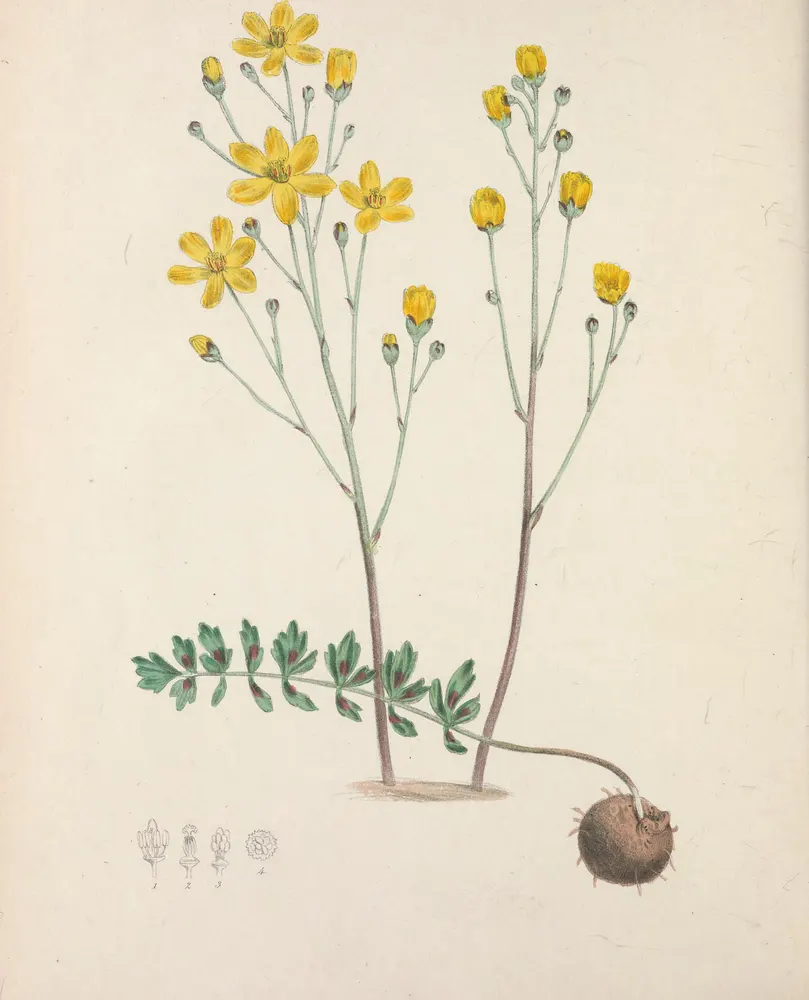
Photo: Knowles, G. B. (George Beauchamp), 1829-1852; Westcott, Frederic, -1861; Baxter, W. Henry, former owner. DSI; Smith, John Donnell, 1829-1928, donor. DSI; Bradbury & Evans, printer; Day & Haghe, printer of plates, No restrictions (via Wikimedia Commons)
Bongardia
Bongardia chrysogonum
Key benefits
✦Traditional uses
✦Across the stony hillsides of Anatolia, the Levant, and the Iranian plateau, Bongardia chrysogonum has long been one of the first green things noticed after winter's rains, and shepherds and foragers in parts of its native range have traditionally gathered its young leaves and starchy tubers as an early spring vegetable. Local knowledge always insisted the tubers be boiled thoroughly, with the cooking water discarded, before eating, a caution passed down through generations who understood this striking little plant was not one to treat carelessly. Beyond the kitchen, its oddly marbled leaves and cheerful golden flowers have quietly earned it a devoted following among specialist bulb and rock garden collectors, who prize it as a true botanical curiosity rather than a common border plant.
How to grow & use it
✦The full apothecary for Bongardia
Traditional remedies and step-by-step preparations, a complete growing guide, and how to harvest, dry, and store it, all unlocked with HerbLens Unlimited.
- ✦Remedies & preparations
- ✦ Growing guide
- ✦Harvest & storage
From under $6 a month. Free plant identifications always included.
- ✦Fritillaria persica
- ✦Oncocyclus iris
- ✦Autumn crocus (Colchicum)
- ✦Leontice (lion's-leaf)
- ✦Gymnospermium
“For the gardener chasing the rare and the strange, a golden spring ephemeral here and gone before summer even arrives.”
Bongardia chrysogonum is the only species in its genus, and its young leaves often carry purple-brown blotches, a marbled pattern it shares with its closest relatives, Leontice and Gymnospermium, that fades as the foliage matures through spring.
Bongardia tubers are traditionally boiled with the water discarded before eating, since they are not safe raw. Without reliable dosing information, pregnant or nursing people, children, and anyone with liver or kidney concerns should avoid it.