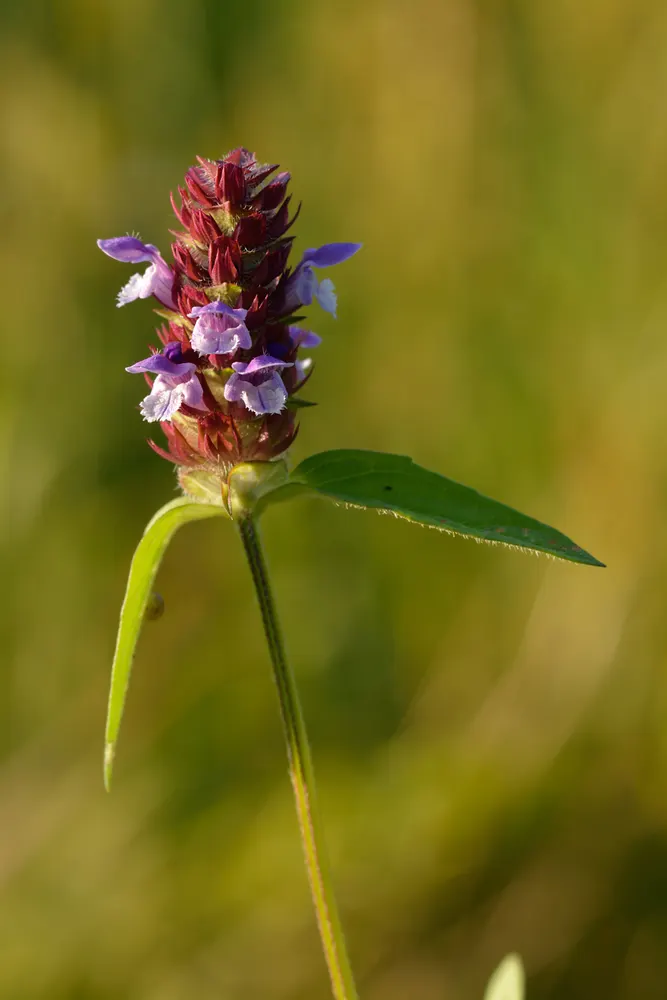
Photo: Ivar Leidus, CC BY-SA 3.0 (via Wikimedia Commons)
Self-heal
Prunella vulgaris
Also known as Heal-all, Woundwort, Heart-of-the-earth, Xia Ku Cao, Carpenter's herb
Key benefits
✦Traditional uses
✦Self-heal earned its name the honest way, by showing up in nearly every corner of the world and being pressed into service for nearly every small hurt. European herbalists once called it carpenter's herb because tradesmen kept it on hand to dress cuts and gashes on the job, while Native American healers steeped it for sore throats, upset stomachs, and skin trouble. In Traditional Chinese Medicine it is known as xia ku cao, or summer dry grass, and has long been valued in that tradition for cooling and calming complaints. Few plants have been trusted by so many different cultures for so many of the same small, ordinary ailments.
How to grow & use it
✦The full apothecary for Self-heal
Traditional remedies and step-by-step preparations, a complete growing guide, and how to harvest, dry, and store it, all unlocked with HerbLens Unlimited.
- ✦Remedies & preparations
- ✦ Growing guide
- ✦Harvest & storage
From under $6 a month. Free plant identifications always included.
- ✦Plantain
- ✦Yarrow
- ✦Calendula
- ✦Yarrow
- ✦Calendula
“For the small cuts, scratchy throats, and everyday nicks that just need a little old-fashioned tending.”
Self-heal's Chinese name, xia ku cao, means summer dry grass, because the flower spikes turn brown and papery in the height of summer while the plant itself is still very much alive and growing beneath them.
Self-heal is generally gentle, but it's best avoided or used only with guidance during pregnancy and breastfeeding. Anyone with an autoimmune condition or on thyroid or immune-modulating medication should be cautious, given its traditional use for immune and glandular complaints.