Photo: MPF, CC BY-SA 3.0 (via Wikimedia Commons)
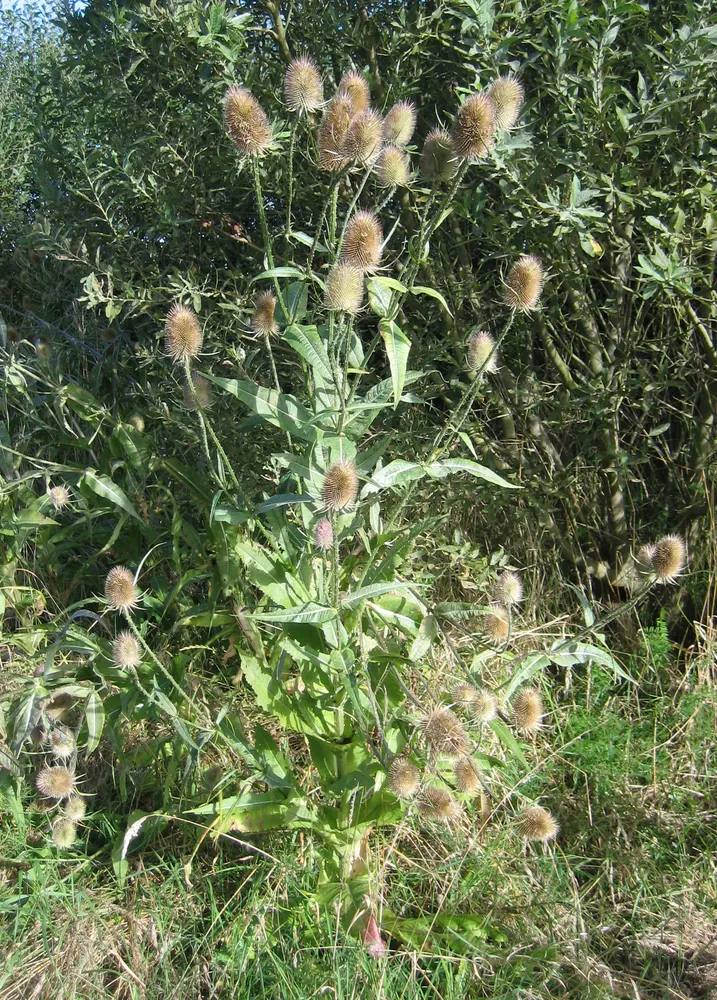
Wild Teasel
Dipsacus fullonum
Also known as Fuller's Teasel, Common Teasel, Card Thistle, Venus' Basin, Brushes and Combs
Key benefits
✦Traditional uses
✦Long before it was ever considered a garden curiosity, teasel earned its keep in the textile trade. For centuries, weavers and clothiers set the dried, spiny flower heads into wooden frames called teasel gigs and dragged them across raw wool to raise a soft, even nap, a job so specific that no synthetic brush could fully replace it until well into the twentieth century. Country herbalists like Nicholas Culpeper also noted a gentler use: the rainwater that gathers naturally in the cupped bases where the leaves clasp the stem was collected and dabbed on the skin as a traditional cosmetic wash, said to soothe sunburn, freckles, and warts. The plant's very name comes from the Old English tæsan, to tease or pluck apart, a nod to its original job carding cloth rather than curing anything.
How to grow & use it
✦The full apothecary for Wild Teasel
Traditional remedies and step-by-step preparations, a complete growing guide, and how to harvest, dry, and store it, all unlocked with HerbLens Unlimited.
- ✦Remedies & preparations
- ✦ Growing guide
- ✦Harvest & storage
From under $6 a month. Free plant identifications always included.
- ✦Burdock root
- ✦Cleavers
- ✦Dandelion root
- ✦Burdock root
- ✦Wild carrot root
“When the roadside turns to silver spiny domes swaying under a rain of finches.”
Real teasel heads were still being used in industrial wool mills well into the 1900s, because their springy, self-releasing hooks could raise a nap on fine cloth without tearing the fibers the way a rigid metal brush would.
Teasel itself is not toxic, but its spiny bracts and stem prickles can scratch skin, so gloves help when handling it. Don't drink the rainwater that collects in its leaf cups, since it can harbor bacteria, and check local rules before planting, as teasel is considered invasive in parts of North America.