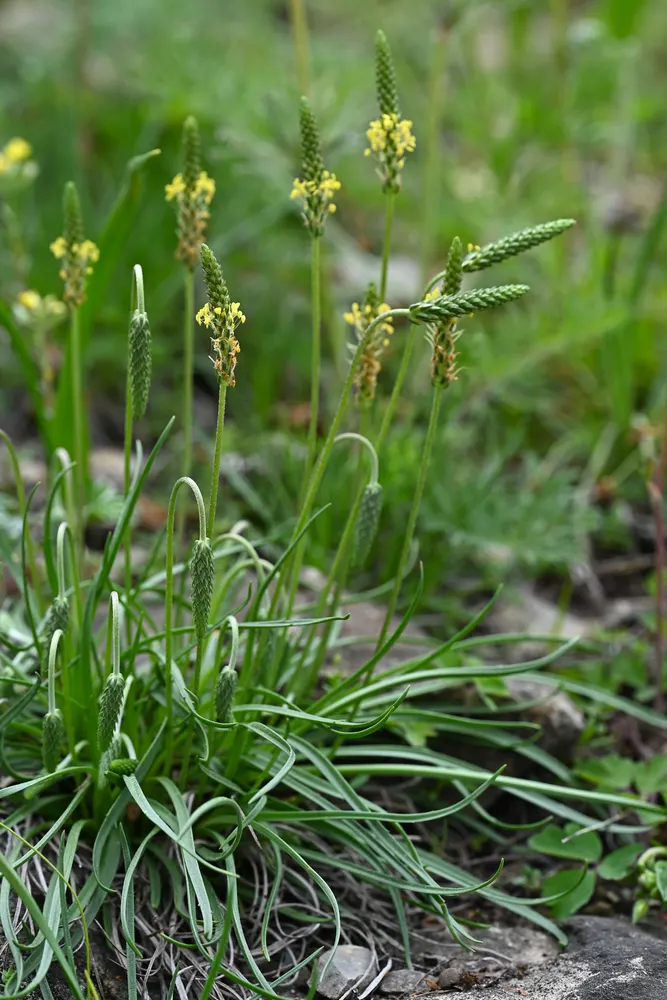
Photo: Krzysztof Ziarnek, Kenraiz, CC BY-SA 4.0 (via Wikimedia Commons)
Alpine Plantain
Plantago alpina
Also known as Mountain Plantain, Alpine Ribwort
Key benefits
✦Traditional uses
✦Alpine plantain belongs to the same beloved family as its lowland cousins, broadleaf and ribwort plantain, herbs that have followed foot-worn paths and mountain trails for centuries as a trailside first-aid plant. Shepherds and herders crossing high pastures traditionally reached for its crushed leaves to lay over insect stings, blisters, and small scrapes, earning plantain the old nickname of nature's bandage across many European mountain cultures. Its leaves were also steeped into soothing infusions for occasional coughs and irritated throats, a comfort passed down through generations of alpine village herbalists. Because it thrives where little else will, this modest rosette became a trusted, always-available companion for those who lived and worked at altitude.
Growing guide
✦Fresh to dried
✦Traditional preparations
✦Alpine Plantain Leaf Tea
A gentle, traditional infusion used historically to soothe an irritated throat or occasional cough.
How it's made. Steep 1 teaspoon of dried alpine plantain leaf in 250 ml of just-boiled water for 8 to 10 minutes, then strain and sip warm.
Fresh Leaf Poultice
A simple trailside remedy traditionally applied to minor skin irritations, insect bites, or small scrapes.
How it's made. Rinse a fresh leaf, crush or chew it lightly to release its juices, and press it gently against the affected area, holding in place for a few minutes.
- ✦Yarrow
- ✦Calendula
- ✦Mullein
- ✦Broadleaf plantain
- ✦Ribwort plantain
“For the quiet resilience of a plant that thrives where the air runs thin.”
Alpine plantain grows so low and tight to the ground that it can survive being grazed, trampled by livestock, and buried under snow for months at a time, only to unfurl its narrow leaves again the moment the mountain thaw begins.
Alpine plantain is not known to be toxic and has a long history of gentle traditional use; introduce it cautiously if you have plant allergies.