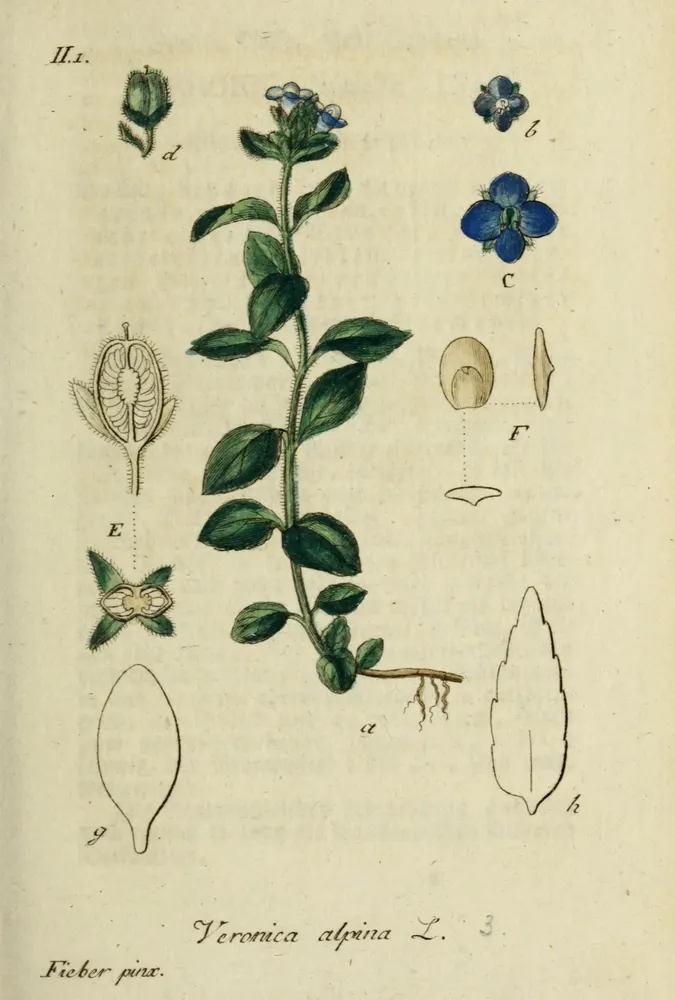
Photo: Sturm, Jacob, Public domain (via Wikimedia Commons)
Alpine Speedwell
Veronica alpina
Also known as Alpine Veronica, Alpine Speedwort
Key benefits
✦Traditional uses
✦Alpine speedwell shares its lineage with common speedwell, a plant long steeped in European folk herbalism for soothing coughs, calming irritated skin, and settling a restless stomach. High in the mountains where it grows, alpine communities are said to have gathered its modest leaves in the same gentle spirit, brewing a mild tea or dabbing a cooled infusion onto minor skin troubles. It never rose to the fame of its lowland cousin in the herbal texts, but it was quietly trusted as a small comfort drawn from a harsh and beautiful landscape.
Growing guide
✦Fresh to dried
✦Traditional preparations
✦Alpine Speedwell Leaf Tea
Traditionally sipped as a mild, soothing tea for occasional coughs and a scratchy throat, following the same folk pattern used for common speedwell.
How it's made. Steep 1 teaspoon of dried leaf and flowering top in 250 ml (1 cup) of just-boiled water for 8 to 10 minutes, then strain. Traditionally taken once or twice a day as needed.
Cooled Wash for Minor Skin Irritation
In alpine folk practice, the same mild tea, once cooled, was used as a gentle wash for small skin irritations or insect bites.
How it's made. Prepare the leaf tea as above and let it cool completely. Apply to the affected area with a clean, soft cloth.
- ✦Thyme
- ✦Mullein
- ✦Elderflower
- ✦Common Speedwell (Veronica officinalis)
- ✦Plantain
“For the hush of high mountain meadows, and a smaller, quieter kind of care.”
Alpine speedwell is a true edge-dweller, often the first flower to bloom right at the retreating margin of a mountain snowbank, racing through its whole flowering season in the short weeks before winter returns.
Alpine speedwell isn't known to be toxic, though it hasn't been studied as closely as common speedwell, so treat it as a mild, occasional plant rather than an everyday tea, and avoid it during pregnancy and breastfeeding.