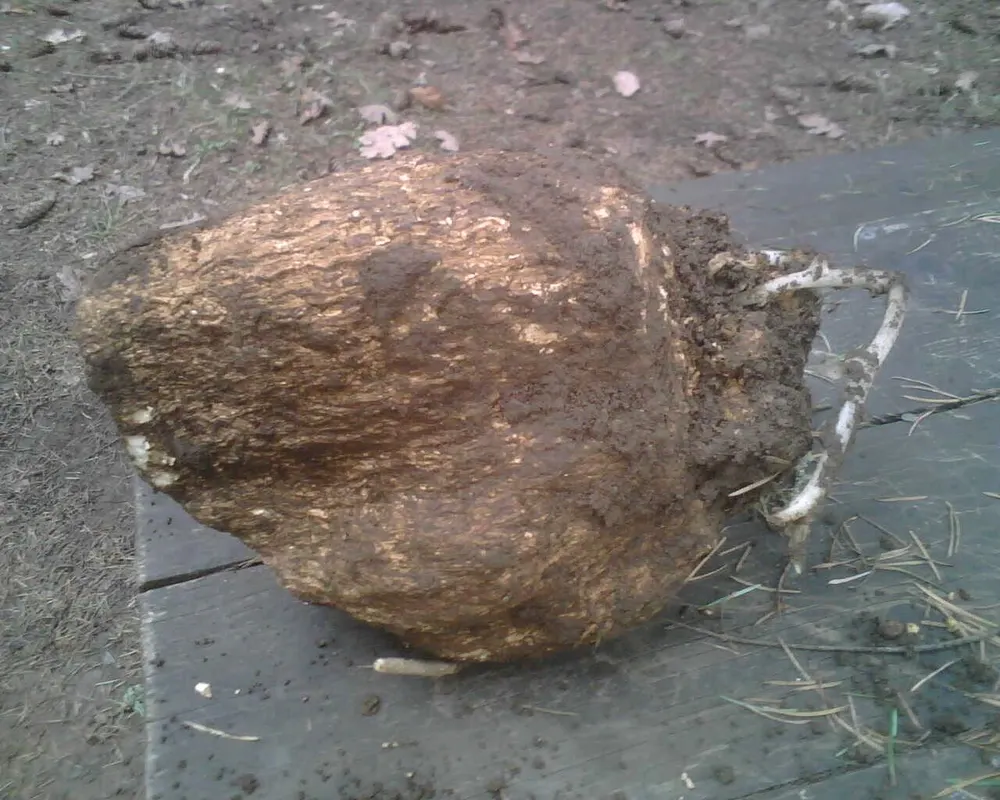
Photo: Trappem at English Wikipedia, Public domain (via Wikimedia Commons)
Poria
Wolfiporia extensa
Also known as Fu Ling, Hoelen, Tuckahoe, Indian Bread, China Root
Key benefits
✦Traditional uses
✦Poria has quietly held its place as one of the most-used herbs in Chinese medicine, tucked into countless classical formulas without ever grabbing headlines the way ginseng or licorice do. Practitioners traditionally reached for it to fortify a tired spleen, drain excess dampness from the body, and settle a mind that would not stop spinning at bedtime. It shows up in foundational formulas like Si Jun Zi Tang, where its job was simply to steady the digestion so the rest of the formula could do its work. There is something fitting about an herb this unassuming, growing hidden underground, being trusted for centuries to bring quiet balance rather than dramatic effect.
How to grow & use it
✦The full apothecary for Poria
Traditional remedies and step-by-step preparations, a complete growing guide, and how to harvest, dry, and store it, all unlocked with HerbLens Unlimited.
- ✦Remedies & preparations
- ✦ Growing guide
- ✦Harvest & storage
From under $6 a month. Free plant identifications always included.
- ✦Ginseng
- ✦Atractylodes (Bai Zhu)
- ✦Licorice root (Gan Cao)
- ✦Polyporus (Zhu Ling)
- ✦Atractylodes for spleen and digestive support
“When the mind will not settle and the stomach needs a quiet, steadying hand.”
Wolfiporia extensa was long known to botanists as Poria cocos, and its old English nickname, tuckahoe, comes from the Powhatan word for the starchy sclerotium, which some Native American and early American communities dug up and ate as an emergency food source during lean seasons.
Poria has a long history as both food and medicine with rare adverse reactions, though its mild diuretic action may add to the effect of diuretic medications. It is best avoided during pregnancy and breastfeeding, and should be bought from a reputable supplier since it is sometimes adulterated.