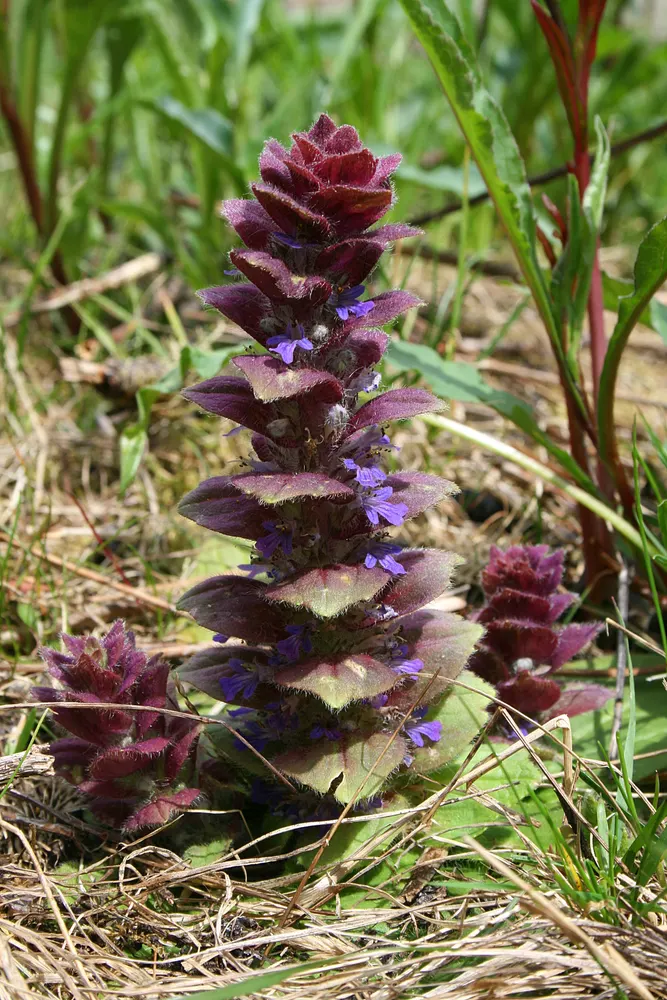
Photo: Jean-Pol GRANDMONT, CC BY-SA 3.0 (via Wikimedia Commons)
Pyramidal Bugle
Ajuga pyramidalis
Also known as Pyramidal Bugleweed, Pyramid Bugle, Alpine Bugle, Upright Bugle
Key benefits
✦Traditional uses
✦Pyramidal bugle belongs to the same small genus as common bugle, Ajuga reptans, a plant that carried real weight in old European herbal tradition, remembered in a proverb passed down through generations of cottage healers: that a household with bugle and sanicle growing nearby had little need of a surgeon. Pyramidal bugle itself, being a shyer, more mountain-loving relative, never earned that same reputation and shows up far more often in old botanical surveys of alpine pastures than in apothecary ledgers. It has long been admired instead for its tidy, furred rosettes and its knack for carpeting rocky, thin-soiled ground where softer plants give up, making it a quiet fixture of traditional upland gardens more for its toughness and beauty than for any remedy drawn from it.
How to grow & use it
✦The full apothecary for Pyramidal Bugle
Traditional remedies and step-by-step preparations, a complete growing guide, and how to harvest, dry, and store it, all unlocked with HerbLens Unlimited.
- ✦Remedies & preparations
- ✦ Growing guide
- ✦Harvest & storage
From under $6 a month. Free plant identifications always included.
- ✦Sweet woodruff
- ✦Creeping thyme
- ✦Lungwort
- ✦Ajuga reptans (common bugle)
“For a low, sturdy carpet of violet-blue that thrives on a rocky slope where little else will take hold.”
The old herbal proverb about bugle needing no surgeon was written about Ajuga reptans, but for centuries country botanists lumped the whole bugle genus together in casual talk, so pyramidal bugle likely borrowed a bit of that folk reputation simply by growing in the same fields and looking like family.
There's no well-documented history of Pyramidal Bugle being used as a food or medicine, so it isn't taken internally.