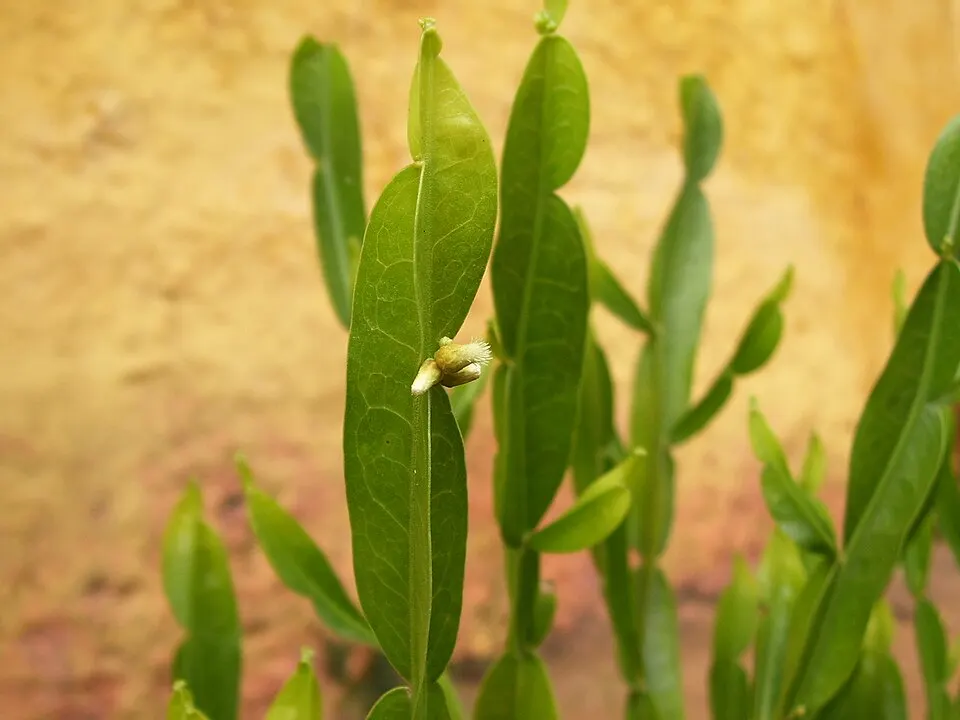
Photo: Mateus Hidalgo, CC BY-SA 2.5 br (via Wikimedia Commons)
Carqueja
Baccharis trimera
Also known as Carquejilla, Carqueja-amarga, Bacárida, Tridented Baccharis
Key benefits
✦Traditional uses
✦Across the grasslands of southern Brazil, Uruguay, Paraguay, and Argentina, carqueja has long been the bitter herb reached for after a rich meal. Gauchos and rural households traditionally brewed its winged stems into a sharply bitter tea said to ease a heavy stomach and support the liver, and it found its way into the amargo bitters tradition alongside herbs like boldo and fennel. It was also folded into folk remedies for aches, sluggish digestion, and general seasonal cleansing, prized less for subtlety and more for the sheer directness of its bitterness. Over generations it became one of those plants every abuela seemed to know where to find growing wild along a fence line.
How to grow & use it
✦The full apothecary for Carqueja
Traditional remedies and step-by-step preparations, a complete growing guide, and how to harvest, dry, and store it, all unlocked with HerbLens Unlimited.
- ✦Remedies & preparations
- ✦ Growing guide
- ✦Harvest & storage
From under $6 a month. Free plant identifications always included.
- ✦Boldo
- ✦Fennel seed
- ✦Lemon balm
- ✦Boldo
- ✦Gentian root
“When the meal sits heavy and what you crave is something green, bitter, and clarifying.”
Carqueja is nearly leafless. What looks like a flattened green blade running up each stem is actually the stem itself, winged into three narrow ridges, which is exactly what its name trimera, meaning three-parted, is pointing to. The plant simply learned to photosynthesize through its own stalk.
Carqueja is in the daisy family, so those sensitive to ragweed or chamomile should be cautious. It's traditionally avoided with gallstones and during pregnancy, and may interact with diabetes, blood pressure, or diuretic medications.