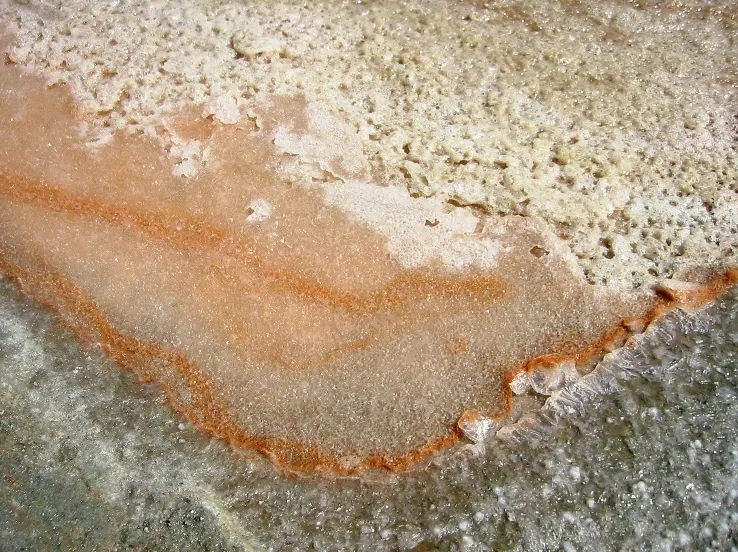
Photo: Fleur de Sel sea salt. Ile de Re 2005, personal photograph., CC BY-SA 3.0 (via Wikimedia Commons)
Dunaliella Algae
Dunaliella salina
Also known as Dunaliella, Salt Lake Algae, Pink Salt Algae, Beta-Carotene Algae
Key benefits
✦Traditional uses
✦Long before anyone understood the biology behind it, salt harvesters around the world noticed that the richest, most productive salt pans often turned a startling shade of pink or red in the summer heat. That color was Dunaliella salina, quietly proving itself one of the most carotenoid-rich organisms on earth. Once scientists identified the algae in the early twentieth century and later realized just how much beta-carotene it could hold, coastal communities and salt works that had lived alongside these rosy ponds for generations found their old observation had a name. Today it is cultivated deliberately in sun-drenched saline ponds and valued as one of nature's most concentrated natural sources of beta-carotene, prized in ways that echo the old folk trust in "the pink water that makes good salt."
How to grow & use it
✦The full apothecary for Dunaliella Algae
Traditional remedies and step-by-step preparations, a complete growing guide, and how to harvest, dry, and store it, all unlocked with HerbLens Unlimited.
- ✦Remedies & preparations
- ✦ Growing guide
- ✦Harvest & storage
From under $6 a month. Free plant identifications always included.
- ✦Carrot
- ✦Astaxanthin-rich algae
- ✦Spirulina
- ✦Spirulina
- ✦Carrot
“For a whisper of the sea's own sunset, distilled into nature's richest known source of beta-carotene.”
Dunaliella salina is the very organism responsible for the famous rose-pink waters of Lake Retba in Senegal and the pink lakes of Australia, coloring the water so vividly that early travelers mistook it for a trick of the light.
Considered safe at typical supplement doses; very high beta-carotene intake can temporarily tint skin yellow-orange, harmlessly. Those on retinoid medication should use caution, since beta-carotene converts to vitamin A.