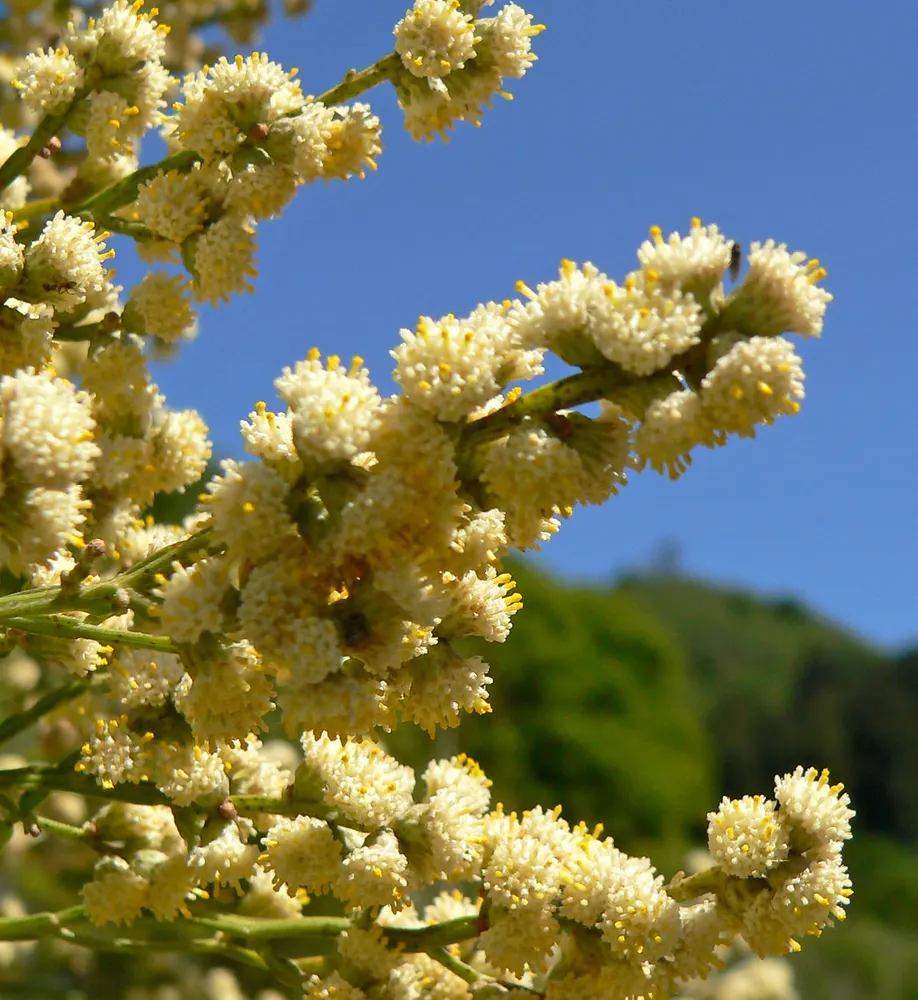
Photo: Stan Shebs, CC BY-SA 3.0 (via Wikimedia Commons)
Carqueja
Baccharis articulata
Also known as Carquexia, Carqueja Amarga, Jointed Baccharis
Key benefits
✦Traditional uses
✦Carqueja has long been steeped as a bitter after-dinner tea across the grasslands of Argentina, Uruguay, Brazil, and Paraguay, where rural households turned to it to settle a heavy stomach. Traditional healers in the region regarded it as a tonic for the liver and gallbladder, often blending it with other bitter herbs in digestive preparations. Its odd, jointed, wing-edged stems made it easy to recognize and gather from the wild, and it became a fixture of South American folk pharmacies long before its compounds were ever studied in a laboratory. It remains one of the most commonly sold bitter herbs in markets throughout the Río de la Plata region, still brewed the same simple way as it was generations ago.
How to grow & use it
✦The full apothecary for Carqueja
Traditional remedies and step-by-step preparations, a complete growing guide, and how to harvest, dry, and store it, all unlocked with HerbLens Unlimited.
- ✦Remedies & preparations
- ✦ Growing guide
- ✦Harvest & storage
From under $6 a month. Free plant identifications always included.
- ✦Yerba mate
- ✦Boldo
- ✦Fennel
- ✦Boldo
- ✦Dandelion root
“For the after-dinner heaviness that asks for something bitter and green.”
Carqueja looks almost leafless because it barely has any leaves at all. What appears to be its foliage is really a network of flattened, jointed green stems that carry out photosynthesis in the leaves' place, which is how the plant earned the nickname jointed baccharis.
Traditionally taken in small amounts as a bitter tea; avoid if you have gallstones or a blocked bile duct, and avoid during pregnancy and breastfeeding. It may strengthen the effect of blood sugar or blood pressure medications.