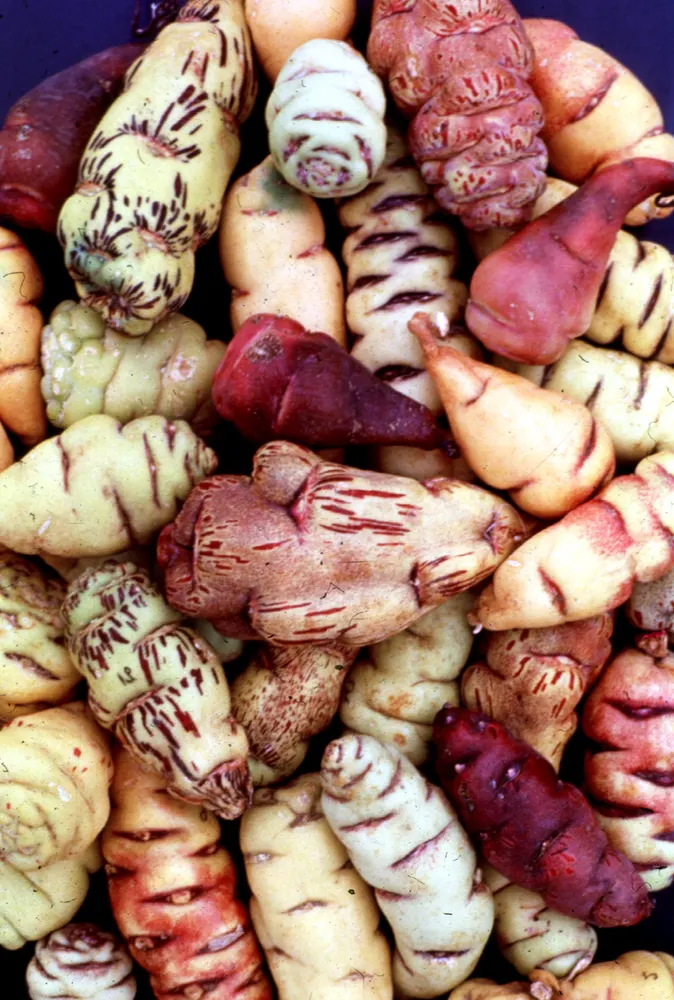
Photo: Michael Hermann, CC BY-SA 4.0 (via Wikimedia Commons)
Mashua
Tropaeolum tuberosum
Also known as Añu, Isaño, Cubio, Andean Nasturtium
Key benefits
✦Traditional uses
✦High in the Andes, mashua has been grown alongside potatoes, oca, and ulluco for thousands of years, prized as one of the hardiest tubers a family could plant when frost threatened everything else. Andean healers traditionally turned to the boiled tuber and its broth as a folk remedy for kidney and bladder complaints, and the plant carried a curious reputation as a calming, appetite-suppressing food. Inca chroniclers wrote that the tuber was served to soldiers and even to royal court attendants specifically to dampen their desires, a belief that has followed the plant for centuries. Today it remains a beloved market vegetable in the highlands, valued as much for its resilience in poor, cold soil as for its old medicinal lore.
How to grow & use it
✦The full apothecary for Mashua
Traditional remedies and step-by-step preparations, a complete growing guide, and how to harvest, dry, and store it, all unlocked with HerbLens Unlimited.
- ✦Remedies & preparations
- ✦ Growing guide
- ✦Harvest & storage
From under $6 a month. Free plant identifications always included.
- ✦Potato
- ✦Oca (Oxalis tuberosa)
- ✦Quinoa
- ✦Garden nasturtium tuber (Tropaeolum majus)
- ✦Watercress (for the peppery leaf flavor)
“For the hardy, high-altitude root that fed empires and carried its own quiet folklore down every terraced mountainside.”
Inca legend held that mashua was fed to soldiers on campaign to cool their desires and sharpen their focus for battle, a reputation so persistent that Andean farmers still half-jokingly call it a bridegroom's vegetable to avoid before a wedding.
Mashua is traditionally eaten cooked rather than raw, since raw tubers have a sharp, peppery bite from glucosinolate compounds. Some research suggests it may have mild anti-androgenic or libido-dampening effects, so those trying to conceive, managing hormone-sensitive conditions, or who are pregnant or breastfeeding should stick to ordinary food-level amounts.