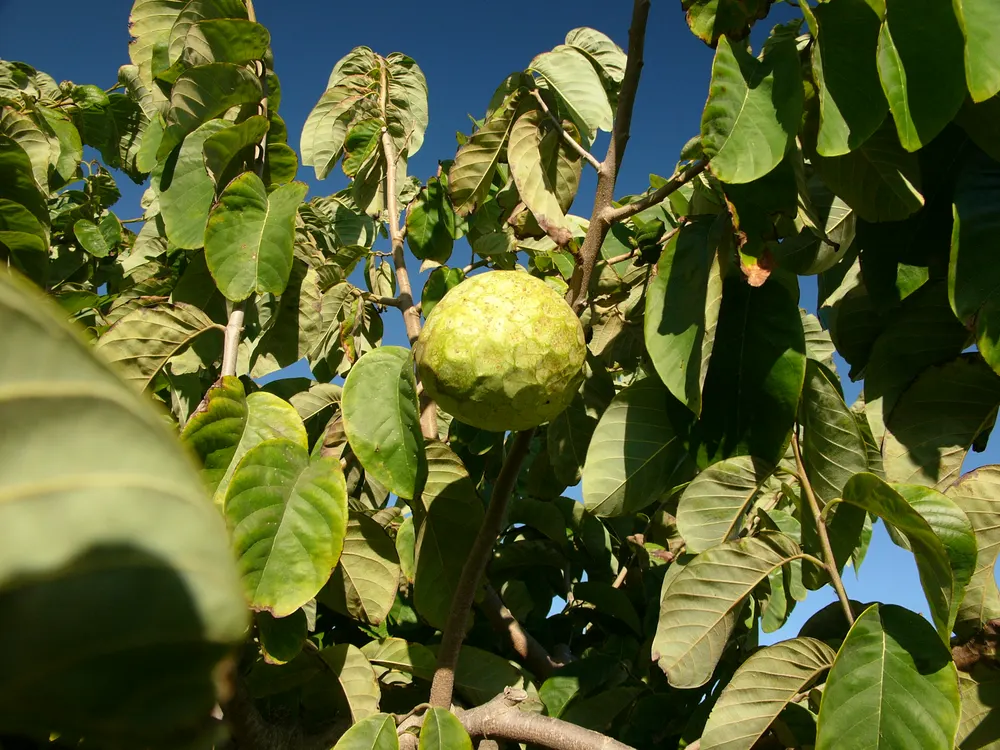
Photo: Hannes Grobe 21:31, 5 November 2006 (UTC), CC BY-SA 2.5 (via Wikimedia Commons)
Cherimoya
Annona cherimola
Also known as Chirimoya, Custard Apple
Key benefits
✦Traditional uses
✦Long before Spanish chroniclers ever tasted it, cherimoya was already a treasured crop of the Andes, cultivated in the cool highland valleys of Peru and Ecuador where its custardy flesh made it a prized food rather than an everyday orchard fruit. Some Andean communities also put the tree's leaves and bark to use in folk remedies for digestive upset and fever, though these practices were never as widely documented or standardized as the fruit's culinary fame. Mark Twain, tasting it on his travels, is said to have called cherimoya the most delicious fruit known to men, and it remains, above all, a fruit grown to be eaten fresh and savored rather than steeped into medicine.
How to grow & use it
✦The full apothecary for Cherimoya
Traditional remedies and step-by-step preparations, a complete growing guide, and how to harvest, dry, and store it, all unlocked with HerbLens Unlimited.
- ✦Remedies & preparations
- ✦ Growing guide
- ✦Harvest & storage
From under $6 a month. Free plant identifications always included.
- ✦Vanilla
- ✦Lime
- ✦Passionfruit
- ✦Atemoya
- ✦Sugar apple (Annona squamosa)
“You want a dessert that tastes like it arrived already finished, sweet, creamy, and fragrant, straight from the tree.”
Cherimoya flowers are protogynous, meaning each bloom opens first as female and only later shifts to releasing pollen, a timing trick that discourages self-pollination and is why growers often hand-pollinate the flowers with a soft brush to get a good crop.
Only the ripe flesh of cherimoya should be eaten. The seeds, skin, and leaves contain annonacin, a compound linked to neurotoxic effects with concentrated or long-term exposure, and the hard seeds should never be chewed or swallowed.