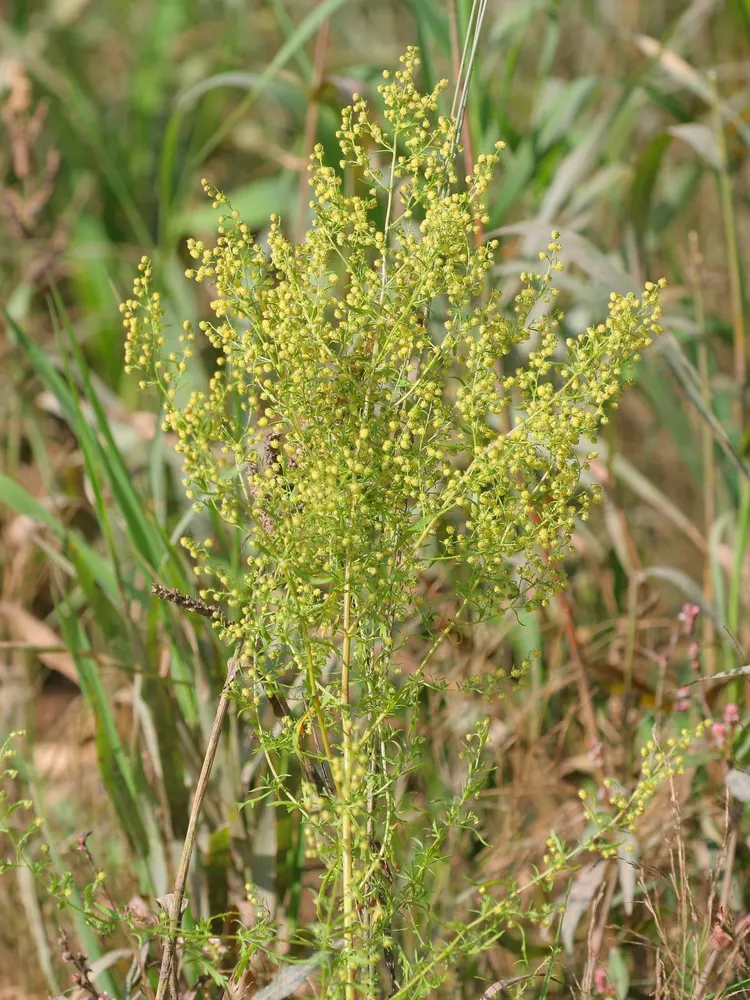
Photo: Kristian Peters -- Fabelfroh 11:39, 16 September 2007 (UTC), CC BY-SA 3.0 (via Wikimedia Commons)
Sweet Wormwood
Artemisia annua
Also known as Sweet Annie, Annual Wormwood, Sweet Sagewort, Qinghao (青蒿)
Key benefits
✦Traditional uses
✦Sweet wormwood has a long history in Chinese herbal medicine, where it is known as qinghao and was recorded in fever remedies dating back over a thousand years, including the writings of the fourth-century physician Ge Hong. Growers and herbalists have also valued its feathery, intensely aromatic foliage, using cut stems as a natural moth and insect deterrent in closets and gardens. Its modern fame rests on a single compound, artemisinin, drawn from this plant and developed into the antimalarial medicines that have since saved millions of lives worldwide, a discovery honored with the 2015 Nobel Prize.
How to grow & use it
✦The full apothecary for Sweet Wormwood
Traditional remedies and step-by-step preparations, a complete growing guide, and how to harvest, dry, and store it, all unlocked with HerbLens Unlimited.
- ✦Remedies & preparations
- ✦ Growing guide
- ✦Harvest & storage
From under $6 a month. Free plant identifications always included.
- ✦Peppermint
- ✦Ginger
- ✦Elderflower
- ✦Boneset (for traditional fever support, with its own distinct history and cautions)
“For the herb that carries one of the great quiet stories of modern medicine inside an ordinary roadside weed.”
In 1972, Chinese scientist Tu Youyou isolated artemisinin from this plant after rereading a 1,600-year-old recipe by the healer Ge Hong, who instructed steeping the fresh herb in cold water rather than boiling it. That low-temperature insight helped preserve the very compound that made the extraction work, and it later earned her the Nobel Prize in Physiology or Medicine.
Sweet wormwood should be avoided during pregnancy and breastfeeding, and it can interact with blood thinners and other liver-metabolized medications. This plant is the source of pharmaceutical artemisinin, but homemade preparations are not a substitute for medically supervised malaria treatment. Those with ragweed or daisy family allergies should also be cautious.