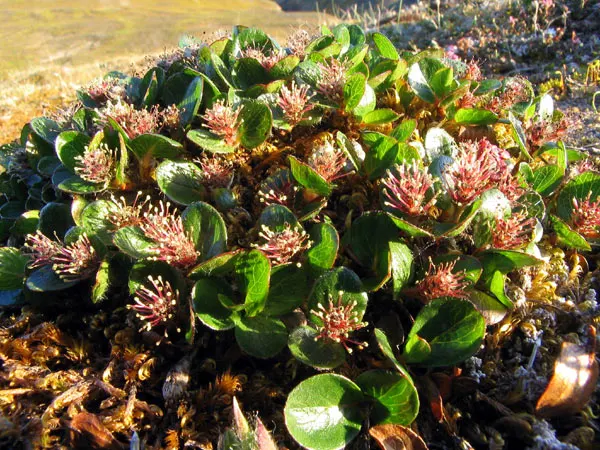
Photo: CC BY-SA 3.0 (via Wikimedia Commons)
Polar Willow
Salix polaris
Also known as Polar Willow, Arctic Willow, Snow Willow
Key benefits
✦Traditional uses
✦Long before willow bark became famous as the forerunner of aspirin, Arctic peoples including the Inuit, Sami, and Chukchi were already chewing the bark and twigs of polar willow or steeping them into a bitter tea to ease aches and bring down fever, drawing on the same salicin chemistry found in its larger willow cousins farther south. In a landscape with few tall plants to turn to, this humble creeping shrub was a genuine medicine chest, its inner bark peeled and used fresh when nothing else grew within reach. The twigs and catkins also served practical ends, woven into small baskets or gathered as emergency browse, and the plant's presence was often read as a sign of thawed, workable ground after the long winter.
How to grow & use it
✦The full apothecary for Polar Willow
Traditional remedies and step-by-step preparations, a complete growing guide, and how to harvest, dry, and store it, all unlocked with HerbLens Unlimited.
- ✦Remedies & preparations
- ✦ Growing guide
- ✦Harvest & storage
From under $6 a month. Free plant identifications always included.
- ✦Meadowsweet
- ✦Birch bark
- ✦Chamomile
- ✦White willow bark (Salix alba)
- ✦Meadowsweet
“For the quiet toughness of a plant that finds a way to bloom where almost nothing else will.”
Polar willow is one of the northernmost woody plants on Earth, found growing on the gravel flats of northern Greenland and Svalbard well past 80 degrees north. What looks like a mat of tiny leaves pressed flat to the ground is, botanically, a full tree, and some individual plants are believed to live for many decades, their trunks simply buried sideways in the tundra soil.
Willow bark contains salicin, chemically related to aspirin, so it carries the same cautions: avoid it with an aspirin allergy, stomach ulcers, a bleeding disorder, or blood thinners. Never give it to children or teens recovering from a viral illness due to the risk of Reye's syndrome, and avoid it during pregnancy and breastfeeding.