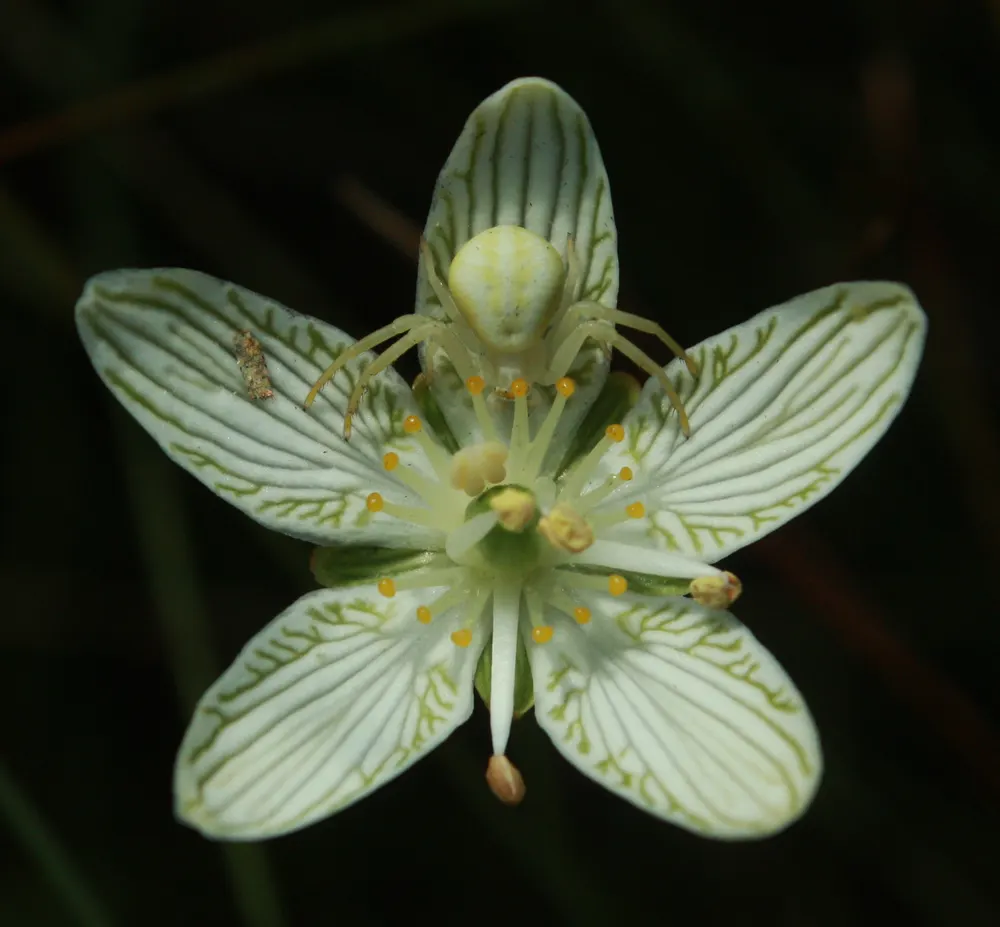
Photo: André-Philippe Drapeau Picard, CC0 (via Wikimedia Commons)
Grass of Parnassus
Parnassia glauca
Also known as Bog Star, Marsh Grass of Parnassus, Fen Grass-of-Parnassus, Northern Grass of Parnassus
Key benefits
✦Traditional uses
✦Grass of Parnassus is better known to botanists and wildflower lovers than to herbalists, and it has never held a major place in the North American medicine chest. Its European relative, Parnassia palustris, turns up in old herbals such as Culpeper's, where it was recommended for the eyes and for soothing the heart and liver, though those uses faded from common practice generations ago. The North American Parnassia glauca has instead been prized simply for growing where it grows, in the calcium-rich fens and wet meadows that give it its name, and finding one in bloom has long been treated as a small reward for a walk through healthy wetland. Its glossy, green-veined white petals opening late in the season, after most other wildflowers have finished, have made it a favorite of naturalists and native plant gardeners rather than a working remedy.
How to grow & use it
✦The full apothecary for Grass of Parnassus
Traditional remedies and step-by-step preparations, a complete growing guide, and how to harvest, dry, and store it, all unlocked with HerbLens Unlimited.
- ✦Remedies & preparations
- ✦ Growing guide
- ✦Harvest & storage
From under $6 a month. Free plant identifications always included.
- ✦Fringed gentian
- ✦Turtlehead
- ✦Marsh marigold
- ✦Parnassia palustris, its Old World relative noted in historic herbals
- ✦Turtlehead (Chelone glabra) for a similar late-season wetland bloom
“For a late summer walk through a wet meadow, when a single green-veined white flower seems to glow above the grass.”
Despite its name, Grass of Parnassus isn't a grass at all, it belongs to the bittersweet family. Between its five true stamens sit odd fringed structures called staminodes, each tipped with a shiny golden gland that mimics a glistening drop of nectar just to lure pollinators in for a closer look.
Grass of Parnassus has no real history as an ingested herb and no modern safety data, so it's best treated as an ornamental rather than a home remedy. It's uncommon in the wild, so choose nursery-grown plants rather than digging it up.