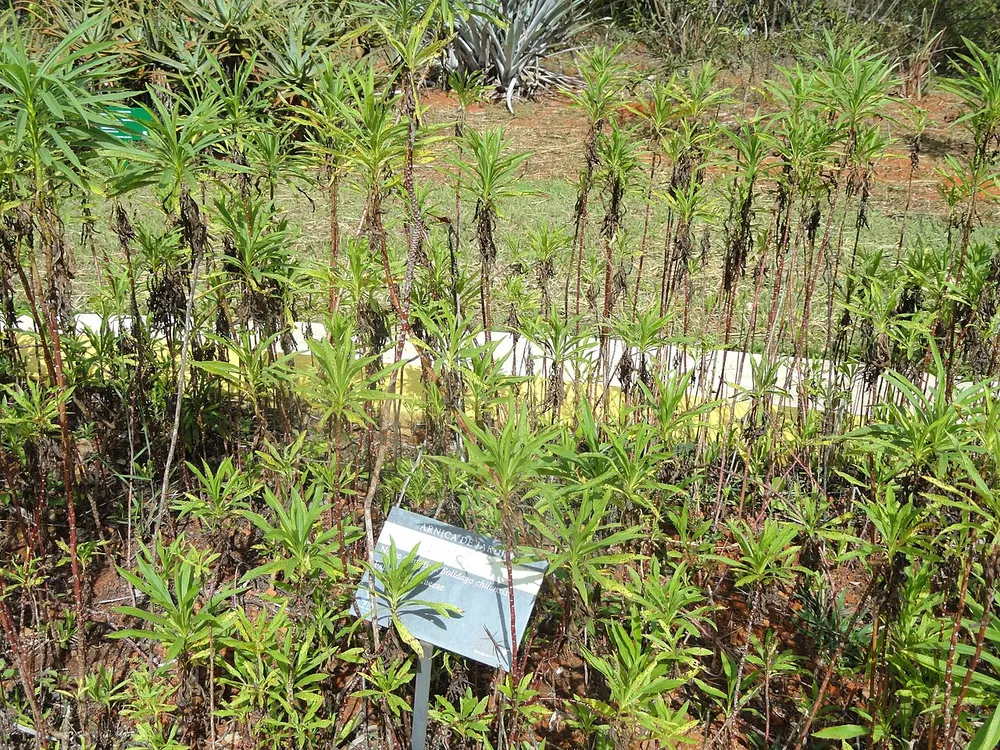
Photo: Daderot, CC0 (via Wikimedia Commons)
Chilean Goldenrod
Solidago chilensis
Also known as Brazilian Arnica, Arnica-do-campo, Erva-lanceta, South American Goldenrod
Key benefits
✦Traditional uses
✦Across Brazil and much of southern South America, Solidago chilensis has long stood in for the European arnica that settlers left behind, its bright yellow flowering tops steeped and applied to bruises, sprains, and sore muscles much the same way. Folk healers also brewed the leaves and flowers into a mild tea, traditionally taken to support the urinary tract and ease minor fluid retention. Country herbalists dressed small wounds and scrapes with it too, valuing its traditionally recognized cleansing touch. Today it still grows wild along fences and pastures, gathered much as it always has been, by hand and by memory.
How to grow & use it
✦The full apothecary for Chilean Goldenrod
Traditional remedies and step-by-step preparations, a complete growing guide, and how to harvest, dry, and store it, all unlocked with HerbLens Unlimited.
- ✦Remedies & preparations
- ✦ Growing guide
- ✦Harvest & storage
From under $6 a month. Free plant identifications always included.
- ✦Calendula
- ✦Plantain leaf
- ✦Arnica montana (topical use)
- ✦Arnica montana
- ✦European goldenrod (Solidago virgaurea)
“For the bruise that calls for a gentle, old-fashioned compress.”
In Brazilian markets, Solidago chilensis is so often sold simply as "arnica" that many buyers never realize it is an entirely different plant from Europe's true Arnica montana, a golden case of a local goldenrod inheriting a legendary name.
As a daisy-family plant, it may trigger allergic reactions in those sensitive to ragweed or related plants. Its diuretic effect calls for caution with kidney or heart conditions, and it's best avoided during pregnancy and breastfeeding.