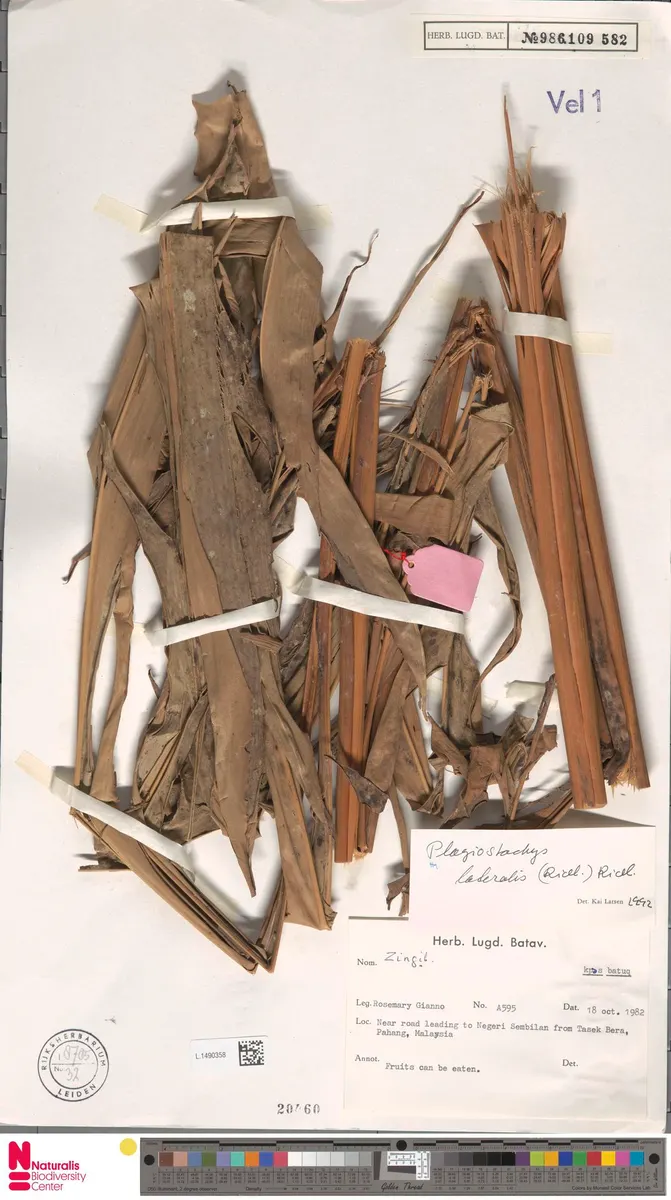
Photo: Naturalis Biodiversity Center, CC0 (via GBIF)
Lateral Wild Ginger
Plagiostachys lateralis
Also known as Bornean lateral-spike ginger
Key benefits
✦Traditional uses
✦Plagiostachys lateralis is, honestly, a plant you are far more likely to meet in a botanist's field notebook than in a healer's satchel. It belongs to the ginger family, a family that has given the world turmeric, cardamom, and true ginger, but this particular species has no documented record of food, craft, or medicinal use that we could confirm from any community or written tradition. What draws people to it instead is its quiet strangeness, a spike of flowers that pushes up sideways from the base of the plant, low in the leaf litter, as though the bloom preferred to stay closer to the forest floor than to the light. For now, its value is mostly the value of mystery, a reminder that not every plant has been fully catalogued or put to use, and that the rainforest still holds species we are only beginning to understand.
How to grow & use it
✦The full apothecary for Lateral Wild Ginger
Traditional remedies and step-by-step preparations, a complete growing guide, and how to harvest, dry, and store it, all unlocked with HerbLens Unlimited.
- ✦Remedies & preparations
- ✦ Growing guide
- ✦Harvest & storage
From under $6 a month. Free plant identifications always included.
The genus name Plagiostachys comes from the Greek for "oblique spike," describing exactly what you see in Plagiostachys lateralis: its flowering spike breaks ground on its own, off to the side of the leafy shoot, rather than crowning the top of the plant the way most gingers do.
No documented food, herbal, or safety data exists for this rainforest ginger relative, so it should not be eaten or applied to the skin. Being a ginger relative does not guarantee it is harmless.