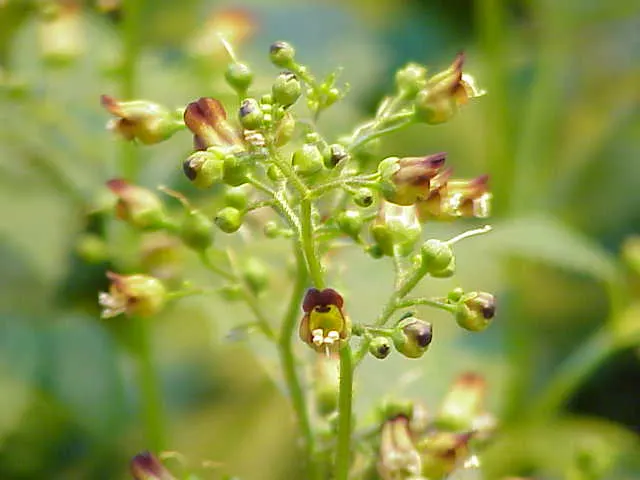
Photo: Kurt Stüber [1], CC BY-SA 3.0 (via Wikimedia Commons)
Figwort
Scrophularia nodosa
Also known as Common Figwort, Knotted Figwort, Throatwort, Scrofula Plant, Rosenoble
Key benefits
✦Traditional uses
✦Figwort earned its common name from the small figlike knots that swell along its rootstock, and old herbalists, working by the doctrine of signatures, took those knots as a sign the plant was meant to treat swollen glands. For centuries it was known simply as the scrofula plant, gathered by country healers to poultice tubercular swellings, stubborn ulcers, and slow-healing wounds. Nicholas Culpeper wrote of figwort as a remedy for the skin and glands in the seventeenth century, and it carried that reputation forward into nineteenth century Eclectic medicine, where it was valued as a gentle cleanser for troubled skin. It was never a kitchen herb or a comforting nightly tea. It was the plant tucked into the hedgerow basket for when the skin needed help.
How to grow & use it
✦The full apothecary for Figwort
Traditional remedies and step-by-step preparations, a complete growing guide, and how to harvest, dry, and store it, all unlocked with HerbLens Unlimited.
- ✦Remedies & preparations
- ✦ Growing guide
- ✦Harvest & storage
From under $6 a month. Free plant identifications always included.
- ✦Calendula
- ✦Plantain
- ✦Chickweed
- ✦Calendula
- ✦Chickweed
“For the little cuts, scrapes, and stubborn skin troubles that call for an old-fashioned green wash.”
Figwort's species name, nodosa, means knotty, referring to the little nodules along its roots that once convinced herbalists, following the old doctrine of signatures, that the plant was nature's own remedy for swollen glands.
Figwort contains small amounts of cardioactive compounds related to those in foxglove, though much weaker, so it is traditionally used externally rather than taken internally. Avoid internal use with heart conditions, heart medications such as digoxin, or during pregnancy and breastfeeding.