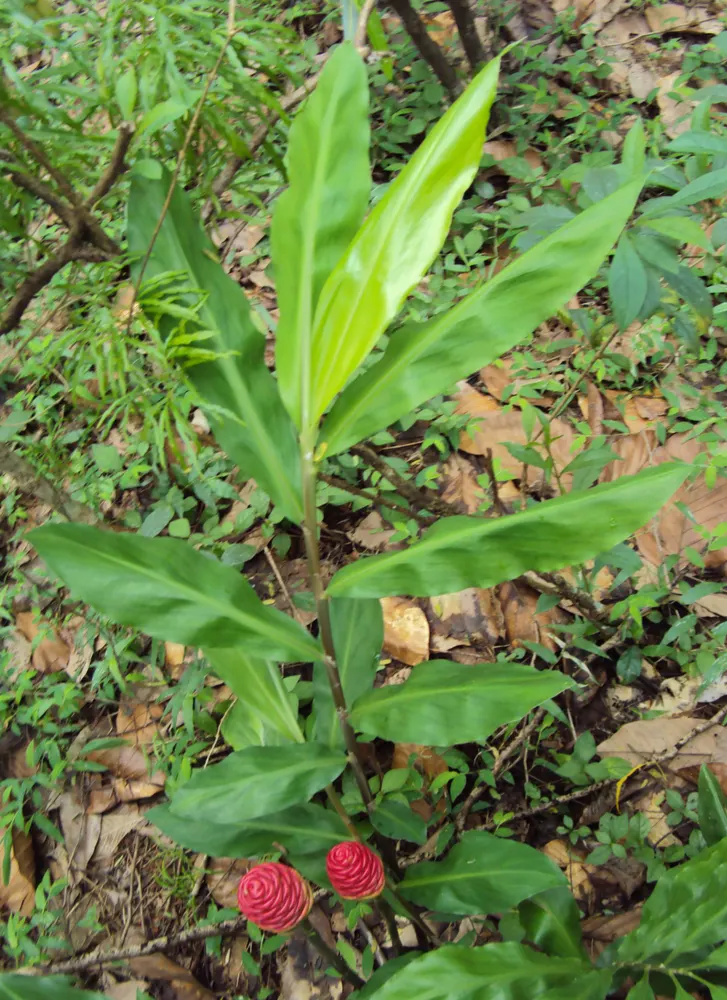
Photo: Vinayaraj, CC BY-SA 3.0 (via Wikimedia Commons)
Shampoo Ginger
Zingiber zerumbet
Also known as Awapuhi, Pinecone Ginger, Bitter Ginger, Wild Ginger, Lempuyang
Key benefits
✦Traditional uses
✦In Hawaii, where it is called awapuhi, this plant has long been treasured for its cone-shaped flower head, which holds a slippery, fragrant liquid that Native Hawaiians squeeze out and use to wash and condition their hair, a practice still passed down today. Across its native range in South and Southeast Asia, where it goes by names like lempuyang, the pungent rhizome has traditionally been used in folk remedies for upset stomachs, fevers, and swelling, much as its close relatives ginger and turmeric have been. Early Polynesian voyagers are believed to have carried the rhizome with them across the Pacific, tucking it among the canoe plants they considered too useful to leave behind. It remains a fixture of tropical gardens today, grown as much for its curious pinecone-like blooms as for its old household uses.
How to grow & use it
✦The full apothecary for Shampoo Ginger
Traditional remedies and step-by-step preparations, a complete growing guide, and how to harvest, dry, and store it, all unlocked with HerbLens Unlimited.
- ✦Remedies & preparations
- ✦ Growing guide
- ✦Harvest & storage
From under $6 a month. Free plant identifications always included.
- ✦Turmeric
- ✦Lemongrass
- ✦Common Ginger
- ✦Common Ginger (Zingiber officinale)
- ✦Galangal
“For a rinse that smells of rain-soaked forest, and a tea that warms the belly like its ginger cousins.”
The pinecone-shaped flower head starts out pale green and slowly ripens to a deep red, and it is this ripe cone, when squeezed, that yields the fragrant liquid Hawaiians have used as shampoo for generations, which is exactly how the plant earned its common name.
Shampoo ginger is generally safe in modest traditional amounts. Like other gingers, it may have a mild blood-thinning effect, so those on anticoagulant medication should use caution, and fresh sap can occasionally irritate sensitive skin.